

Mounjaro (tirzepatide) has become one of the most talked-about weight loss treatments available in the UK. Approved by the MHRA in November 2023 for weight management in adults, it's generated significant interest from people who've tried other approaches without lasting success.
But what does Mounjaro actually do, and why are the clinical results so notable? This guide breaks down the key benefits, backed by the trial data, so you can make an informed decision about whether it's right for you.
The short answer: Mounjaro works on two hormone pathways simultaneously, producing weight loss results that consistently outperform single-hormone treatments in clinical trials. In the largest trial to date, patients lost up to 22.5% of their body weight over 72 weeks.
How does Mounjaro work?
Most weight loss injections currently available in the UK, including tirzepatide (Mounjaro) semaglutide (Wegovy), work by mimicking a single gut hormone called GLP-1 (glucagon-like peptide-1). GLP-1 slows stomach emptying, reduces appetite, and helps regulate blood glucose. It's effective, but it's only half the picture.
Mounjaro is the first medication in the GIP/GLP-1 receptor agonist class, meaning it activates two hormone pathways at once:
- GLP-1 (glucagon-like peptide-1): signals fullness to the brain, slows digestion, and helps regulate blood sugar
- GIP (glucose-dependent insulinotropic polypeptide): works alongside GLP-1 to further reduce appetite and improve how the body stores and uses energy
Why those two hormones matter for weight loss
Activating both pathways produces a stronger and more sustained appetite-suppressing effect than either hormone alone. The body's natural response to eating involves both GLP-1 and GIP working together, and Mounjaro is designed to replicate that combined signal more completely.
This dual action is the core reason Mounjaro's clinical results exceed those of single-hormone treatments. It's not just a stronger dose of the same mechanism; it's a fundamentally different approach to appetite and metabolic regulation.
What the research says about Mounjaro efficacy for weight loss
The weight loss results from Mounjaro's clinical trials are among the most substantial ever recorded for a licensed weight management medication. The MHRA's approval was based on two large-scale, randomised, placebo-controlled trials: SURMOUNT-1 and SURMOUNT-2.
SURMOUNT-1: results in adults without diabetes
2,539 overweight or obese adults took part over 72 weeks. Average weight loss by dose:
SURMOUNT-2: results in adults with type 2 diabetes
938 participants with type 2 diabetes took part over the same 72-week period. Even in this population, where weight loss is typically harder to achieve, the results were substantial:
- 10mg dose: average 13.4% weight loss; 81.6% of patients lost at least 5% of body weight
- 15mg dose: average 15.7% weight loss; 86.4% of patients lost at least 5% of body weight
- Placebo: average 3.3% weight loss; 30.6% of patients lost at least 5%
What this means in practice: for someone starting at 95kg, a 20% reduction represents 19kg of weight loss. That's a level of change that meaningfully reduces the health risks associated with obesity, including cardiovascular disease, type 2 diabetes, and high blood pressure.
3 key benefits beyond the scales
Weight loss is the headline benefit, but Mounjaro's impact on overall health goes considerably further. Because obesity is closely linked to a cluster of serious conditions, reducing body weight through Mounjaro can trigger meaningful improvements across several health markers.
Cardiometabolic health
The SURMOUNT trials tracked a range of secondary outcomes alongside weight loss. Participants on tirzepatide showed significant improvements in:
- Blood pressure: reductions in systolic blood pressure across all dose groups
- Blood sugar regulation: improved fasting glucose and HbA1c levels, even in participants without diabetes
- Cholesterol and lipid profiles: reductions in triglycerides and improvements in HDL cholesterol
- Waist circumference: meaningful reductions, which is a key independent marker of cardiovascular risk
A UK cost-effectiveness analysis published in 2025 concluded that tirzepatide's use could lead to substantial cost savings within the healthcare system by reducing the burden of obesity-related complications, including reduced risks for type 2 diabetes and cardiovascular events.
Reduced food cravings and appetite
One of the most commonly reported experiences from patients on Mounjaro is a significant reduction in food noise, the persistent background preoccupation with food and hunger that makes sustained weight management so difficult. By acting on both GLP-1 and GIP receptors, Mounjaro reduces appetite more comprehensively than hunger alone. Patients report feeling satisfied after smaller portions and experiencing fewer cravings between meals.
This isn't just a quality-of-life improvement. It's the mechanism that makes the weight loss sustainable. Patients aren't white-knuckling a calorie deficit; they genuinely want to eat less.
Mental health and wellbeing
The same 2025 UK cost-effectiveness analysis also noted improved mental health outcomes among tirzepatide users, an area of growing clinical interest. Obesity is associated with higher rates of depression and anxiety, and significant weight loss has been shown to improve psychological wellbeing and self-reported quality of life.
What to expect when starting Mounjaro
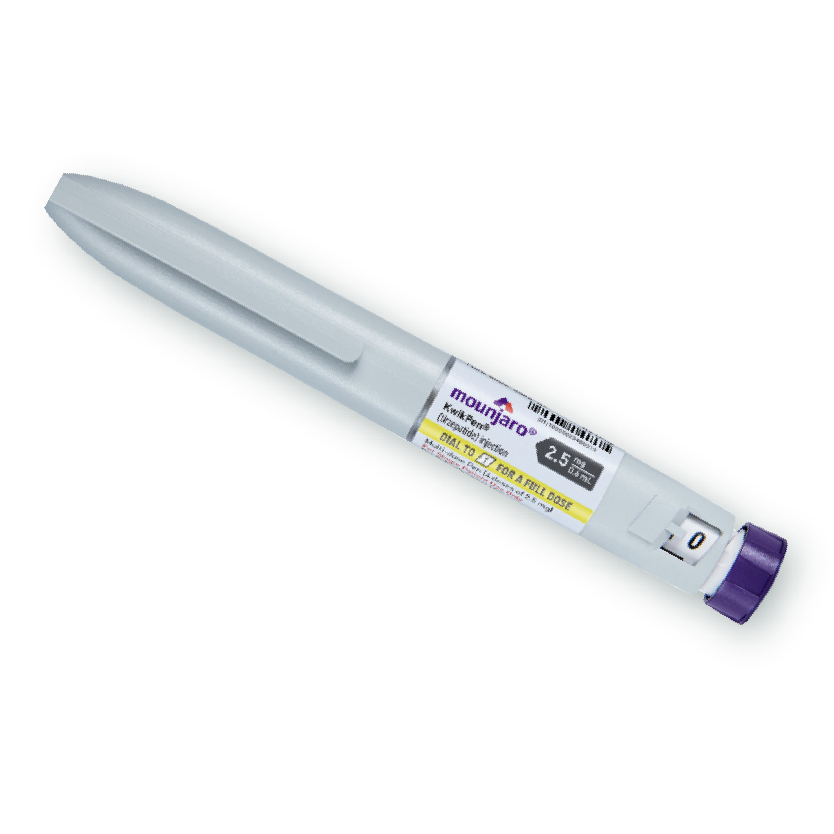
Mounjaro is administered as a once-weekly injection using the Mounjaro KwikPen, a pre-filled device that contains four doses (a full month's supply). The injection is subcutaneous, meaning it goes just under the skin, into the abdomen, thigh, or upper arm.
Dose titration
Treatment starts at a low dose to allow the body to adjust, then increases gradually over time:
- 2.5mg weekly for the first four weeks (starting dose)
- 5mg weekly from week five onwards
- Dose may increase in four-week intervals up to a maximum of 15mg weekly, based on your response and clinical review
This stepped approach is deliberate. It minimises the risk of side effects, particularly the nausea and digestive discomfort that are most common in the early weeks of treatment. Most patients find these settle significantly after the first month.
Common side effects with Mounjaro
The most frequently reported side effects include:
- Nausea (most common, particularly in the first few weeks)
- Diarrhoea or constipation
- Reduced appetite (which is also the intended effect)
- Mild fatigue or headache
These are generally mild to moderate and tend to improve as the body adjusts to the medication. Serious side effects are uncommon but should be discussed with your prescribing pharmacist before starting treatment.
Start your Mounjaro treatment with Phlo Clinic
If you're considering Mounjaro, Phlo Clinic offers a fully online, clinically supported service with no GP referral or waiting list required. Here's how it works:
- Complete a short medical questionnaire online
- Our qualified prescribing pharmacists review your information and assess your suitability
- If approved, your Mounjaro KwikPen is dispatched with free Royal Mail Tracked 24 delivery, temperature-controlled to maintain efficacy
- Monthly check-ins with our clinical team keep your treatment on track
Treatment prices include delivery and ongoing clinical support. Every order also includes a complimentary weight loss kit, access to our 16-week nutrition and behaviour change programme, and advice articles in our Weight Loss Advice Hub.
Mounjaro is a prescription-only medication. All orders are subject to a clinical consultation and assessment of suitability by our prescribing pharmacists. Treatment is approved for use by the MHRA.
References
- MHRA. (2023). MHRA authorises diabetes drug Mounjaro (tirzepatide) for weight management and weight loss. https://www.gov.uk/government/news/mhra-authorises-diabetes-drug-mounjaro-tirzepatide-for-weight-management-and-weight-loss
- MHRA. (2024). Four-dose Mounjaro KwikPen approved by MHRA for diabetes and weight management. https://www.gov.uk/government/news/four-dose-mounjaro-kwikpen-approved-by-mhra-for-diabetes-and-weight-management
- Jastreboff, A.M. et al. (2022). Tirzepatide once weekly for the treatment of obesity. New England Journal of Medicine, 387(3), 205–216. SURMOUNT-1 trial data cited via MHRA approval documentation. https://www.nejm.org/doi/full/10.1056/NEJMoa2206038
- Davies, M. et al. (2022). Tirzepatide versus insulin degludec in adults with type 2 diabetes and obesity or overweight (SURMOUNT-2). Cited via MHRA approval documentation.
- Alshamrani, A. et al. (2025). Analysis of tirzepatide acquisition costs and weight reduction outcomes in the UK: SURMOUNT-1 cost-effectiveness analysis. PubMed Central. https://pmc.ncbi.nlm.nih.gov/articles/PMC12085389/
.png)
