

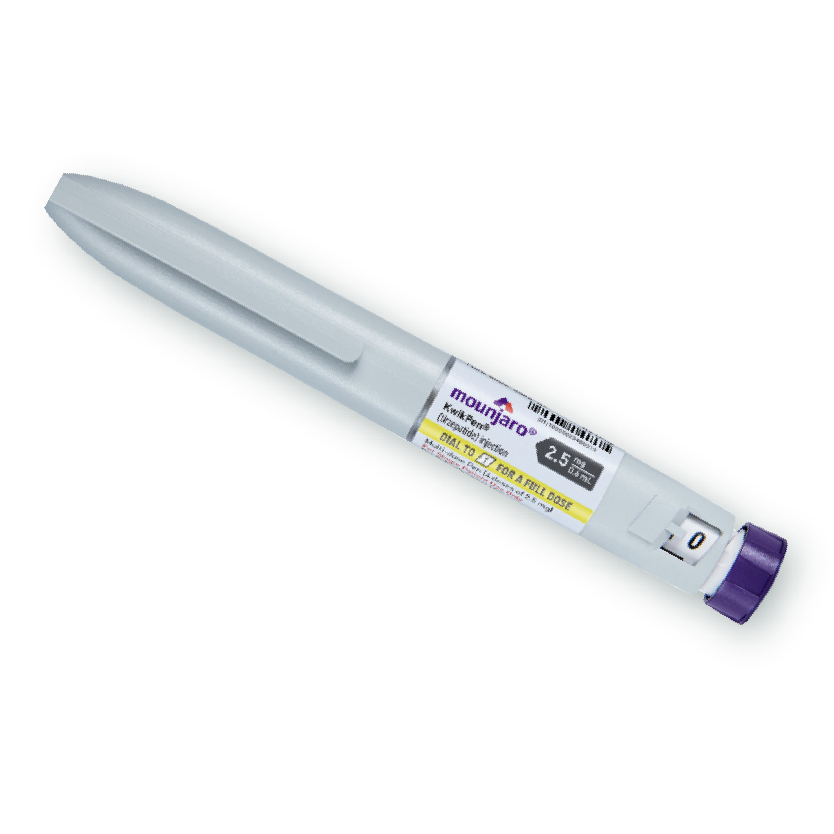
Mounjaro comes in six dose strengths, starts at 2.5mg, and works by gradually scaling up until you find the level that delivers consistent weight loss with manageable side effects. But knowing the list of doses is only part of the picture. Understanding why the schedule works the way it does, what your maintenance dose actually means, and how to handle the moments when things don't go to plan, is what separates patients who get results from those who struggle.
This guide covers everything you need to know about Mounjaro doses: the full titration schedule, the difference between titration and maintenance doses, what happens if you miss a dose, and how to know when you've found the right level for you.
Key facts at a glance:
- Mounjaro comes in six strengths: 2.5mg, 5mg, 7.5mg, 10mg, 12.5mg, and 15mg
- Everyone starts at 2.5mg, regardless of weight or goals — this is to help your body adapt to the medication while minimising side effects
- The minimum time between dose increases is four weeks
- The maximum licensed dose is 15mg once weekly
- Not everyone needs to reach 15mg to see significant results
What do you mean by Mounjaro doses?
Mounjaro doses refer to the amount of tirzepatide, the active ingredient, in each weekly Mounjaro injection. Tirzepatide works by activating two hormone receptors simultaneously (GIP and GLP-1), which suppresses appetite, slows gastric emptying, and improves blood sugar regulation. According to the European Medicines Agency's product information, tirzepatide reaches steady-state plasma concentrations after approximately four weeks of weekly dosing, which is precisely why the titration schedule is built around four-week intervals.
The six available strengths are 2.5mg, 5mg, 7.5mg, 10mg, 12.5mg and 15mg.
The Mounjaro Titration Schedule
Titration is the process of gradually increasing your dose over time. It exists for one reason: safety. Introducing tirzepatide too quickly can cause gastrointestinal side effects (nausea, vomiting, constipation) that lead many patients to quit treatment prematurely. A slower approach gives your body time to adapt.
The common schedule looks like this:
[Table omitted for manual insertion — Mounjaro titration schedule (weeks and dose)]
Four weeks is the minimum between increases. You can stay on a dose longer if it is working well or if side effects need more time to settle. What you cannot do is increase more frequently than every four weeks.
Can You Slow Down or Stay on a Lower Dose?
Yes, and this is often the right call. If you are losing weight steadily, there is no clinical requirement to keep escalating. The goal is your personal maintenance dose: the lowest effective amount that keeps weight loss consistent without causing unnecessary discomfort.
Titrating down is also an option. If you move up to a new strength and the side effects are unmanageable, your clinician can step you back down to the previous dose. The schedule is a framework, not a fixed rule.
What Is the Highest Mounjaro Dose?
The maximum licensed dose of Mounjaro is 15mg once weekly. You cannot exceed this dose, and combining pens to create a larger amount is not recommended by the manufacturer.
It is worth noting that the 15mg dose is not the target for everyone. Clinical trials from the SURMOUNT programme showed meaningful weight loss at all dose levels. Reaching 15mg is only appropriate if lower doses are not delivering sufficient results and you are tolerating the medication well.
How Much Weight Loss Can You Expect at Each Dose?
Results from the SURMOUNT-1 trial, the pivotal phase 3 study for tirzepatide in weight management, showed the following average weight loss after 72 weeks with diet and exercise:
- 5mg: approximately 15% body weight reduction
- 10mg: approximately 19.5% body weight reduction
- 15mg: approximately 20.9% body weight reduction
These are averages. Individual results depend on starting weight, dietary habits, physical activity, and how long you stay on treatment (1).
Finding Your Maintenance Dose
Your maintenance dose is the strength you settle on for long-term weight management, once you have reached your 'goal weight'.
It is the dose where you are losing weight at a sustainable rate without experiencing side effects that affect your daily life.
Your clinician may assess several factors when determining the right level:
- Weight loss rate: A steady loss of 1-2 pounds per week suggests the current dose is effective
- Appetite control: Persistent hunger throughout the week may indicate the dose needs adjusting upward
- Side effect profile: Constant nausea, vomiting, or digestive issues are a signal to pause escalation or step back down
- Time on treatment: Results often improve the longer you stay on a consistent dose
What happens if I stop Mounjaro for a while and want to restart?
If you stop Mounjaro for an extended period and then restart, you cannot resume at a high dose. You will typically need to return to 2.5mg and re-titrate from the beginning to avoid reintroducing the drug too quickly.
Managing Side Effects During Dose Increases
Side effects are most common in the first week after a dose increase. The transition from 2.5mg to 5mg, or from 5mg to 7.5mg, challenges your body to adapt to a higher level of the drug. This is normal and expected.
Common side effects during titration include:
- Nausea
- Constipation
- Heartburn or indigestion
- Fatigue in the days following the dose
There are several practical steps to reduce side effect severity:
- Eat smaller portions, particularly in the first few days after a dose increase
- Avoid high-fat, fried, or spicy foods which can worsen nausea
- Stay well hydrated throughout the week
- Eat slowly and stop eating as soon as you feel full
Most side effects subside within a few days as your body adjusts. If they persist for the entire week at the same intensity, speak to your Phlo Clinic clinician before taking the next dose. Pushing through severe, ongoing side effects is not the right approach, and a temporary pause or step-down is always preferable to stopping treatment entirely.
Missed Doses and Schedule Changes
Missing a weekly injection is not a crisis, but how you handle it matters.
The standard protocol is straightforward:
- Within 4 days of your missed dose: Take it as soon as you remember, then resume your regular schedule
- More than 4 days after your missed dose: Skip it entirely and take your next dose on the usual day
Never take two doses within three days of each other.
You can also change your injection day if needed. The only requirement is that there is a gap of at least three days between any two doses.
What to avoid when taking a Mounjaro dose
Even with a clear schedule, certain errors come up regularly.
Avoid these:
- Doubling up after a missed dose: Never take two injections to compensate for a missed one without medical advice
- Rushing the titration: Increasing your dose before the four-week minimum is up increases side effect risk without improving results
- Stopping abruptly at a high dose: Although it is safe to stop cold, if you need to stop treatment, discuss a tapering plan with your clinician. This way it would be easier to remain on higher doses if you find this is what you need.
- Ignoring pen expiry: Once opened, KwikPens should be used within 30 days at room temperature. Discard any pen with cloudy or discoloured solution
Frequently Asked Questions
What is the starting dose of Mounjaro?
Everyone begins on 2.5mg once weekly for the first four weeks. This dose is for treatment initiation only and is not intended to produce significant weight loss on its own. Its purpose is to help your body adjust to tirzepatide before the first therapeutic dose of 5mg.
How much weight can you expect to lose on different Mounjaro doses?
The SURMOUNT-1 trial showed average weight loss of approximately 15% on 5mg, 19.5% on 10mg, and 20.9% on 15mg after 72 weeks with diet and exercise. Individual results vary considerably based on adherence, starting weight, and lifestyle factors.
What is the cost of Mounjaro pens per dose in the UK?
Mounjaro KwikPens typically cost £140-£160 for a 4-week supply through private clinics, depending on dose strength. NHS availability remains limited to specific obesity and diabetes criteria.
Can you drink alcohol while taking Mounjaro?
Moderate alcohol consumption is generally manageable after the first few weeks of treatment, but it is advisable to limit intake. Alcohol can worsen nausea and dehydration, particularly in the days following a dose increase. Avoid binge drinking, as it slows gastric emptying further and may intensify side effects.
How does Mounjaro dosing differ for type 2 diabetes versus weight loss?
The titration schedule is identical for both conditions, starting at 2.5mg and increasing to a maximum of 15mg. The clinical focus differs for type 2 diabetes, the primary measure is HbA1c reduction, while for weight management, the focus is on body weight percentage lost. Clinicians adjust the maintenance dose based on which condition is being primarily treated.
What happens if you store Mounjaro KwikPens incorrectly?
Unopened pens should be stored in the refrigerator between 2°C and 8°C. Once in use, pens can be kept at room temperature below 30°C for up to 30 days. Discard any pen that has been frozen, exposed
References
- Jastreboff AM, Aronne LJ, Ahmad NN, Wharton S, Connery L, Alves B, et al. Tirzepatide once weekly for the treatment of obesity. N Engl J Med. 2022;387(3):205–216. doi:10.1056/NEJMoa2206038
.png)
