
.avif)

A once-daily tablet for weight management in adults
No injections, and no food or drink timing rules
Works by mimicking GLP-1, a natural appetite hormone
Used alongside a reduced-calorie diet and increased physical activity
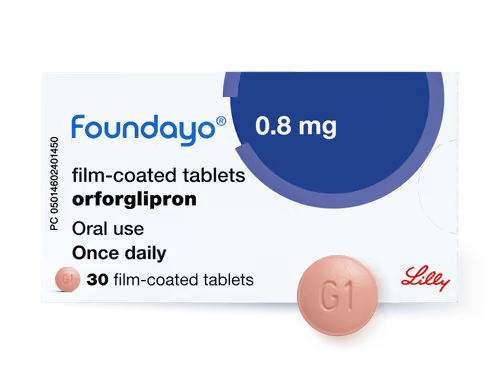
*Buy your first 0.8mg Foundayo tablets at the starting price of £79, with subsequent 0.8mg orders increasing to £119 thereafter.
Most GLP-1 medicines like semaglutide and tirzepatide are peptides, short protein chains that are broken down by stomach acid, which is why they're usually given by injection. Orforglipron is a small-molecule, non-peptide drug, which survives digestion intact and can be taken as a tablet. It can be taken at any time of day with or without food.
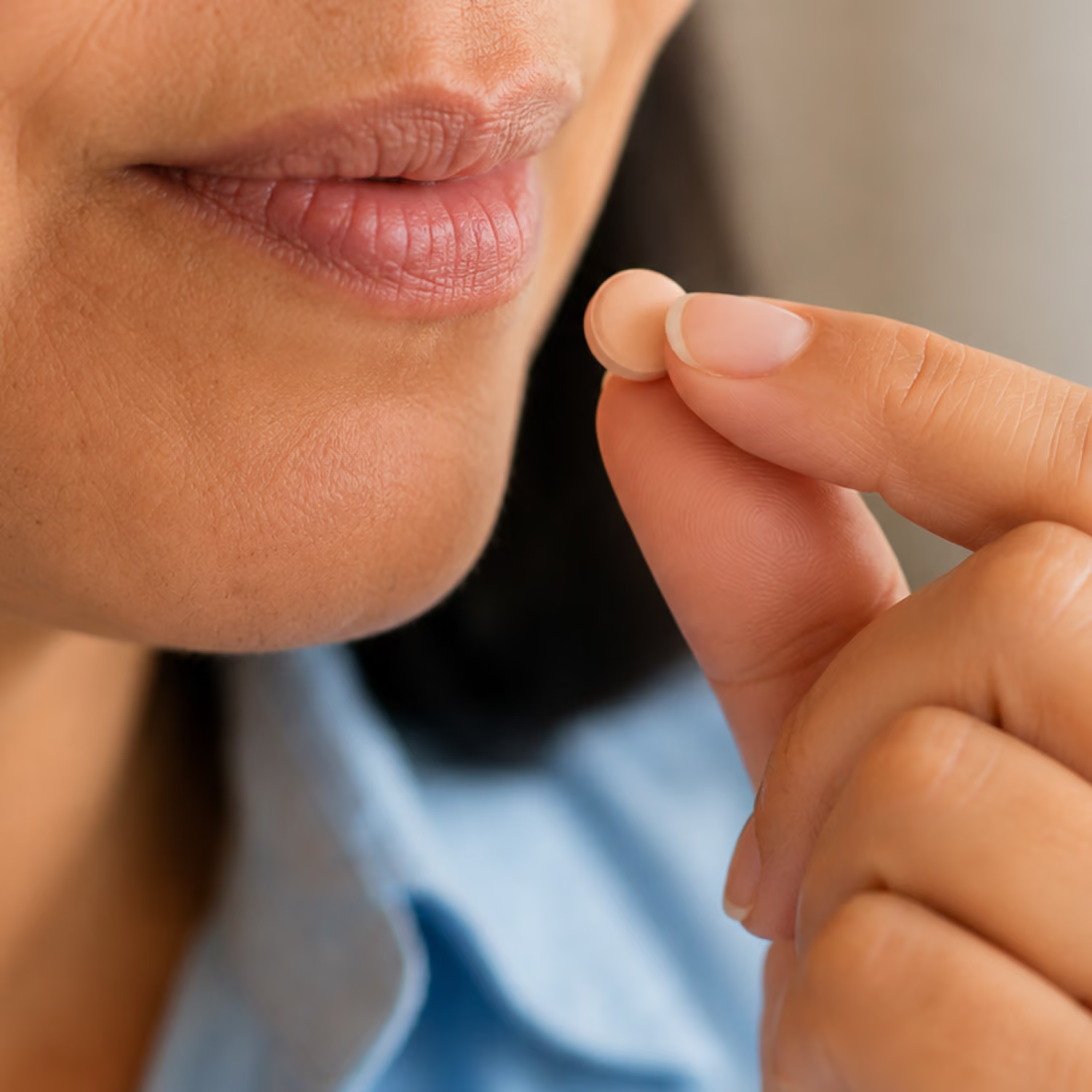
Foundayo starts from £79 for your first month, with pricing increasing gradually as your dose steps up through treatment. Every order includes free Tracked 24 delivery and ongoing clinical support, with no hidden fees.
*Get your first order of 0.8mg Foundayo tablets at the starting price of £79, with subsequent 0.8mg orders increasing to £119 thereafter.
*Discount codes will be auto-applied at checkout to reflect our 2 month bundle prices at these rates.
Foundayo (orforglipron) is taken once a day as a tablet. It is started at a low dose and increased gradually in steps, each lasting at least 30 days (also known as “titration”) to help reduce side effects, until you reach the maintenance dose your prescriber sets.
Foundayo comes in six tablet strengths: 0.8mg, 2.5mg, 5.5mg, 9mg, 14.5mg, with 17.2 mg the maximum.
A typical schedule starts at 0.8 mg for at least 30 days, then steps up to 2.5 mg and 5.5 mg, after which the prescriber may move to 9 mg, 14.5 mg or 17.2 mg depending on response and tolerability. Not everyone needs the highest dose.
Always follow your prescriber's instructions.
Any dose schedule shown here is a general guide. Your own dose, and how quickly it increases, will be set by your prescriber based on your individual response and tolerability.

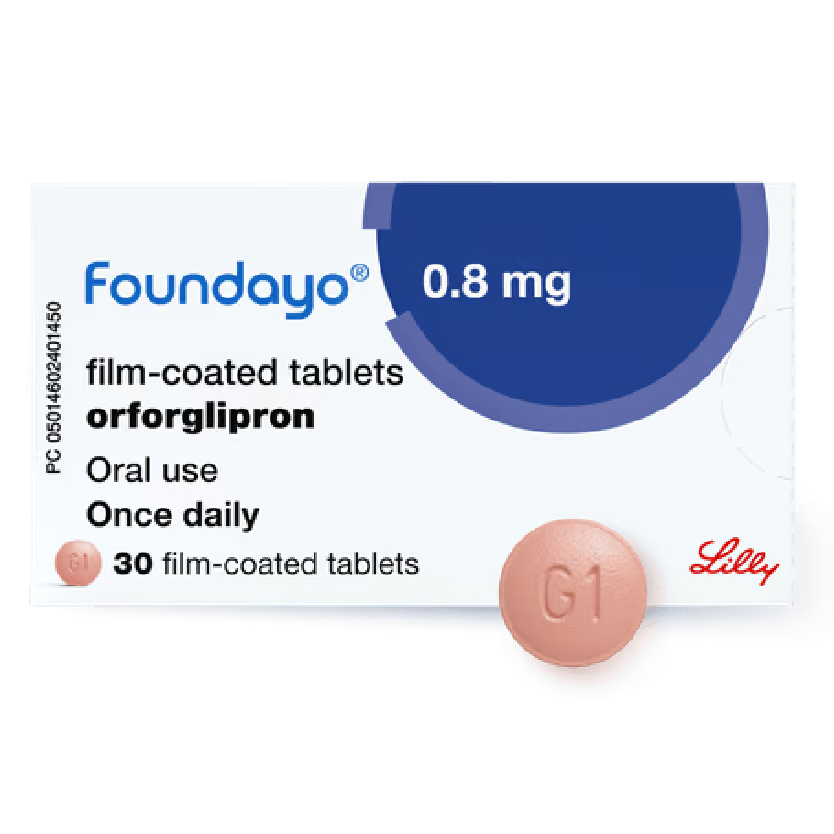
Orforglipron is sometimes called "the Mounjaro pill", but orforglipron and Mounjaro are different medicines, even though both come from the same manufacturer. Eli Lilly. Mounjaro is a weekly injection; orforglipron is a daily tablet.
Mounjaro's active ingredient is tirzepatide, which activates both GLP-1 and GIP hormone receptors. Orforglipron activates GLP-1 only. This dual action is generally why Mounjaro has shown greater average weight loss in trials than orforglipron has so far. Orforglipron's trade-off is its format: a daily tablet that removed the need for a weekly injection, which is the feature many patients are watching closely.
Compared with the Wegovy tablet, both are oral GLP-1 medicines, but the Wegovy tablet is peptide-based and must be taken on an empty stomach with a small sip of plain water, followed by a 30-minute wait before eating, drinking or taking other medicines. Orforglipron does not require those rules and can be taken at any time of day, with or without food. Their dose schedules also differ.
Mounjaro's active ingredient is tirzepatide, which activates both GLP-1 and GIP hormone receptors. Orforglipron activates GLP-1 only. This dual action is generally why Mounjaro has shown greater average weight loss in trials than orforglipron has so far. Orforglipron's trade-off is its format: a daily tablet that removed the need for a weekly injection, which is the feature many patients are watching closely.
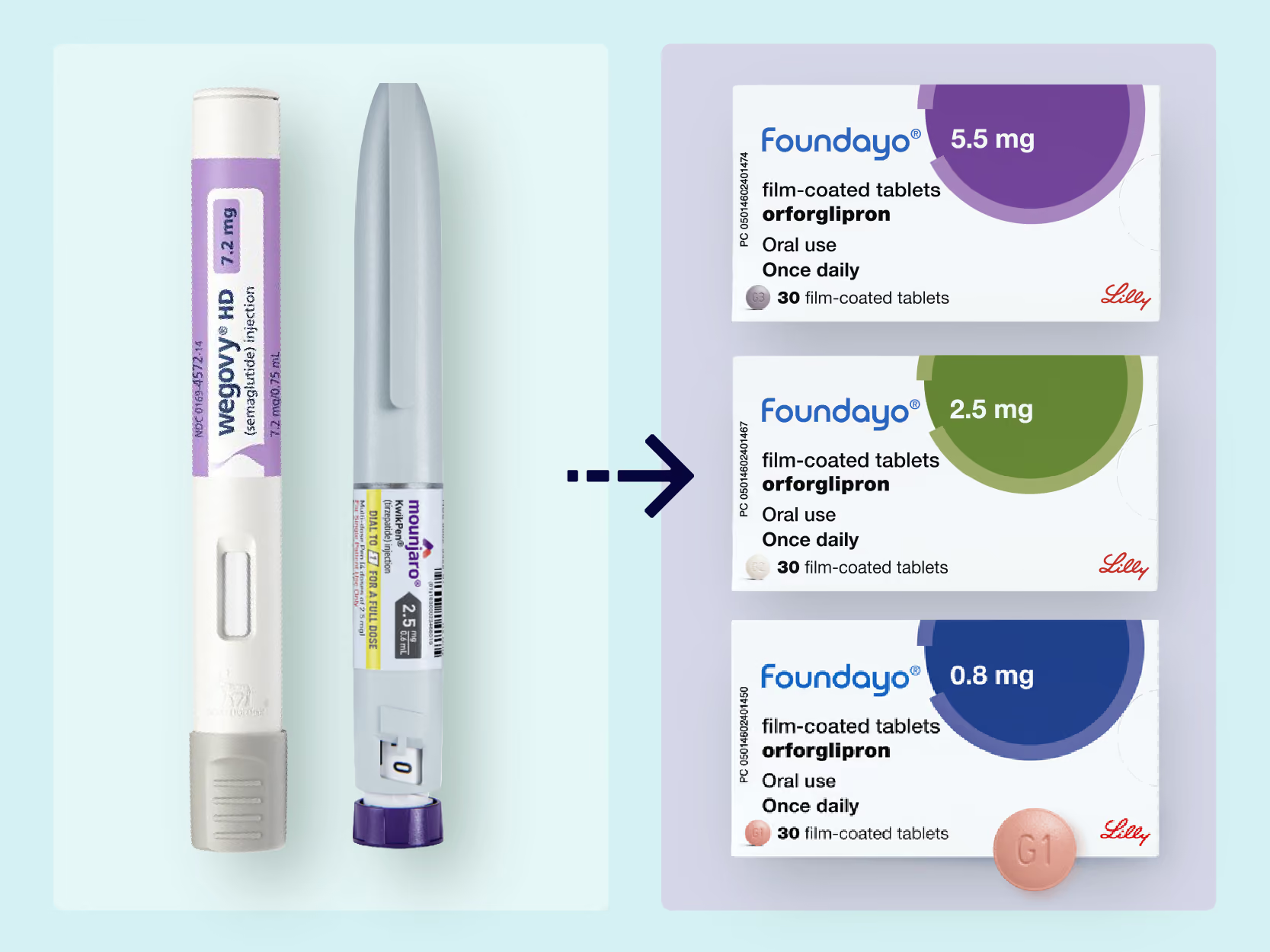
Some patients already using an injectable GLP-1 medicine may consider switching to a tablet for convenience.
These medicines work differently from one another, so any switch needs medical guidance from the team at Phlo Clinic. Switching incorrectly can increase the risk of side effects or reduce how well treatment works.
If you're already on Wegovy or Mounjaro and thinking ahead to an oral option, our guide on GLP-1 washout period covers the general principles that would also apply here. A prescriber-led transition is essential, and should never be self-managed.
Wharton S, Aronne LJ, Stefanski A, et al. Orforglipron, an oral small-molecule GLP-1 receptor agonist for obesity treatment. N Engl J Med. 2025;393(19):1796-806. (ATTAIN-1)
Wharton S, Blevins T, Connery L, et al. Daily oral GLP-1 receptor agonist orforglipron for adults with obesity. N Engl J Med. 2023;389:877-888. (Phase 2)
Eli Lilly and Company. FDA approves Lilly's Foundayo™ (orforglipron). Investor news release, April 2026.
UK Parliament, House of Commons Library. Deciding which medicines are used in the NHS.
MHRA / NICE — official guidance on medicines licensing and technology appraisal (gov.uk / nice.org.uk).
