

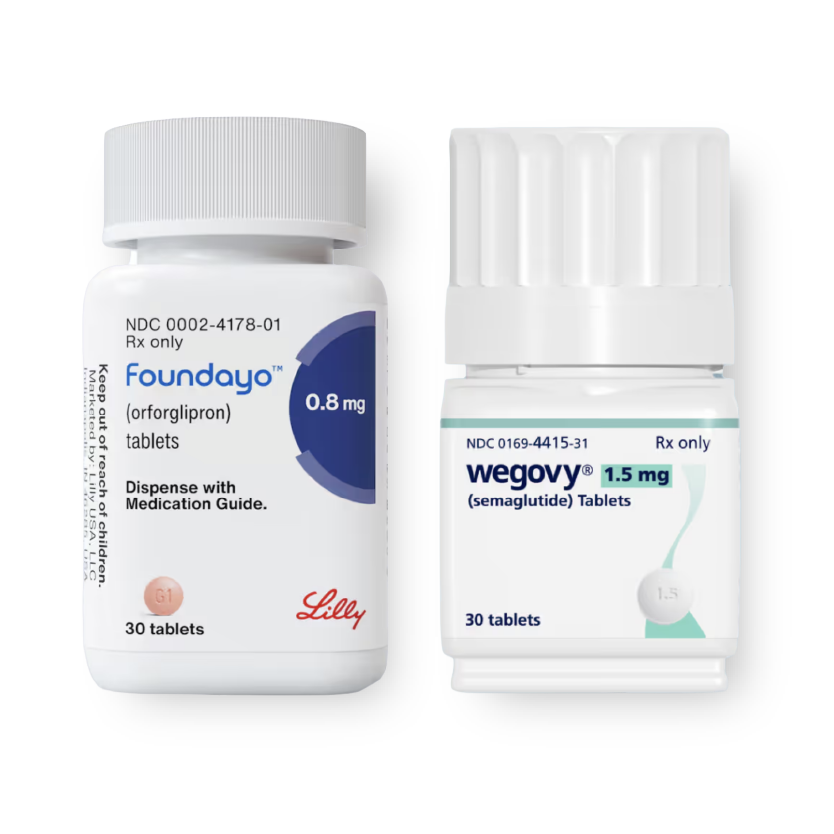
Medicines like Wegovy and Mounjaro have helped lots of people lose weight and improve their health more widely. Now, even more treatments are being developed, including tablets and newer injections.
This is a guide to what may be coming in the near term (next year, or so) and midterm (around 2–5 years) based on information that’s publicly available. It’s written in simple language, but we’re sticking to the science.
Important: A medicine launch can sound “close”, but it still needs UK approval (a licence) and then it needs to be supplied. Dates can change.
First, a quick reminder: what are GLP-1 medicines?
GLP-1 medicines work with signals in your body that can help you:
- feel fuller
- feel less hungry
- have more steadier blood sugar
Some newer medicines work on more than one signal, which may help some people lose more weight, but side effects and safety always matter too.
Near-term: what may arrive next in the UK in the next year or so
1) Wegovy as a tablet (a daily pill version containing semaglutide)
What it could mean: If a Wegovy-type tablet is approved in the UK, it may suit people who:
- don’t like injections
- prefer a daily routine
A helpful note: Some GLP-1 tablets should be taken in a very particular way (for example, on an empty stomach). If this is relevant, your prescriber and pharmacy team will explain the exact steps.
This has already launched in the USA and is proving very popular already.
2) Orforglipron tablets (a new daily GLP-1-style pill)
What it is: A daily tablet that works like a GLP-1 medicine, but it’s made differently from injection medicines.
Why it matters: This kind of tablet could make treatment feel more simple for some people, and tablets can sometimes be easier to supply in large numbers.
Mid-term: what could follow (around 2–5 years)
These are exciting, but they usually take longer because they need bigger studies and careful safety checks.
3) Retatrutide injection (a “triple action” weekly jab)
What it is: A weekly injection designed to act on three body signals linked to appetite and metabolism.
Why people are watching it: Early results suggest it may lead to very large weight loss for some people. But strong medicines also need strong safety evidence, and that takes time.
4) CagriSema injection (a combination weekly jab)
What it is: A weekly injection that combines two medicines:
- one that acts like GLP-1 (helps hunger/fullness)
- one that acts like another fullness signal (often called “amylin”)
Why it matters: Combination treatments are being developed because they may help:
- weight loss go further for some people
- hunger control feels steadier over time
- possible benefits associated with muscle retention
Beyond Novo Nordisk and Eli Lilly: other companies to know about
Lots of other companies are building new treatments too. These may be tablets or injections, and some aim for less frequent dosing.
Here are a few examples you may hear about:
Survodutide (weekly injection)
A medicine that targets two signals linked to appetite and energy use. It’s being studied in people with obesity, with and without type 2 diabetes.
MariTide (long-acting injection, less frequent dosing)
A treatment being studied with the goal of less frequent injections (for example, monthly-style dosing). Less frequent dosing could help some people stay on treatment.
VK2735 (injection, with an oral version being explored)
Another “dual signal” medicine (similar type of idea to existing dual-acting injections, but a different product). Likely to have a catchier name in due course!
Amylin-based medicines (like petrelintide)
These focus on a different fullness hormone pathway (not GLP-1). Some people may do better with different pathways, or with combinations.
What to take from this: Over the next few years, we’re likely to see more choice — and choice matters, because different people need different options.
“It’s not only about weight.” What are other health licences we may see?
Many people living with obesity also live with other health problems, and some of these medicines may help those too. That’s why researchers are testing them in conditions like:
1) Heart disease risk (already relevant in the UK)
Wegovy already has a UK licence linked to heart risk, so what does that mean?
Wegovy’s UK licence includes use for some people to reduce the risk of serious heart problems (like heart attack or stroke).
In simple terms:
It’s for adults who are overweight or obese and already have cardiovascular disease.
It means Wegovy can already be used for more than “just a weight loss medicine”.
For the right people, it can be part of a plan to lower future heart risk, alongside things like blood pressure control, cholesterol treatment, stopping smoking, and regular activity.
What it does not mean:
It does not replace other heart treatments. Your clinician checks what’s safest and most helpful for you.
2) Sleep apnoea (breathing pauses during sleep)
Some newer medicines are being studied to see if weight loss and other body changes can improve obstructive sleep apnoea. And sleep apnoea can already be a qualifying co-condition for starting weight loss treatment at lower BMIs than 30.
3) Fatty liver disease (sometimes called MASH/MASLD)
Researchers are testing whether these medicines can help reduce liver fat and liver inflammation.
4) Kidney and long-term heart outcomes
Large studies are looking at whether certain medicines can reduce long-term risks for the heart and kidneys, especially in people at higher risk.
5) Joint pain from osteoarthritis (especially knee pain)
Some studies are looking at whether significant weight loss (and possibly other effects) can reduce pain and improve movement.
A reality check on what this means for you
If you’re hoping for a tablet option, you’re not alone. It’s one of the biggest “next steps” in this space.
If you’re hoping for better health, not just weight loss, that’s also where things are going: more research is focusing on the health problems that often come with obesity, like heart disease, sleep apnoea, and fatty liver disease.
If you’re considering treatment with Phlo Clinic
We can help you understand:
- which options are currently available in the UK
- what might suit your needs and health history
- how to manage side effects
- how to build habits that support long-term results
References
.png)
