
.png)
There’s no fixed time limit on how long you can stay on Mounjaro. Whether you’re using it privately for weight loss or it’s been prescribed for type 2 diabetes, the answer is the same: treatment continues for as long as it’s working, you’re tolerating it well, and it’s clinically appropriate for you.
That said, “as long as it works” means something specific. Your prescribing pharmacist will assess your progress at regular intervals, and continued treatment is based on clear clinical markers, not just how you feel. Understanding what those markers are, and how the NHS and private routes differ, helps you plan your treatment with confidence.
The short answer: Mounjaro can be used long-term, and for many patients, that means years rather than months. There’s no ceiling dose you must reach, and some patients stay at lower doses indefinitely. Here’s what the evidence and current UK guidance actually say.
What UK guidance says about long-term Mounjaro use
Neither NICE TA924 (which covers Mounjaro for type 2 diabetes) nor NICE TA1026 (which covers its use in obesity management) sets a maximum duration for treatment. Both guidelines allow for indefinite use, provided certain conditions are met. For patients with type 2 diabetes, this reflects the chronic nature of the condition; for weight loss patients using Mounjaro privately, there’s equally no upper time limit imposed by NICE or by prescribers.
How long do you spend on each Mounjaro dose?
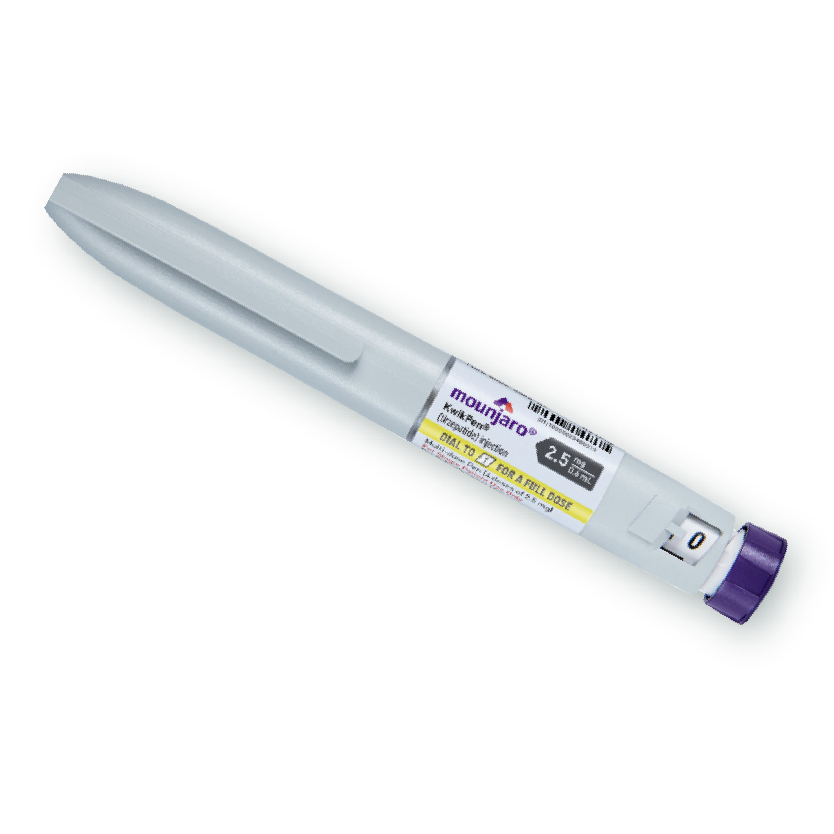
Mounjaro comes in six dose strengths, from 2.5mg up to 15mg. The standard approach is to start at the lowest dose and increase in 2.5mg increments every four weeks, giving your body time to adjust and minimising side effects. This process is called titration, and it isn’t a race. You spend a minimum of four weeks at each dose before moving up, and many patients stay at a given dose for longer if they’re losing weight well or managing side effects.
The dose you settle on long term is your maintenance dose. That could be anywhere from 5mg to 15mg depending on your individual response, and there’s no clinical obligation to reach the highest dose.
2.5mg (weeks 1 to 4)
The 2.5mg dose is the starting dose only. It’s not intended to produce significant weight loss or glycaemic control on its own; its purpose is to let your body adjust to tirzepatide with the lowest possible risk of nausea or digestive side effects. Most patients move to 5mg after four weeks.
5mg (weeks 5 to 8, or longer)
At 5mg, tirzepatide becomes clinically active for weight loss. Some patients notice meaningful appetite suppression and early weight loss at this level. If you’re responding well and tolerating the dose without significant side effects, your prescriber may recommend staying here rather than increasing further. For some patients, 5mg becomes a long-term maintenance dose, and that’s a clinically appropriate outcome, not a sign that treatment isn’t working.
7.5mg (weeks 9 to 12, or longer)
7.5mg is where many patients begin to see more consistent weight loss. If progress at 5mg has plateaued and you’re tolerating the medication well, your prescriber may suggest moving up. Some patients find 7.5mg is the right long-term dose for them, balancing good results with manageable side effects.
10mg (weeks 13 to 16, or longer)
At 10mg, clinical trial data from the SURMOUNT-1 trial showed average weight loss of around 19.5% of body weight over 72 weeks. Patients who reach this dose and are tolerating it well may stay here as their maintenance dose, particularly if they’ve achieved or are close to their target weight.
12.5mg (weeks 17 to 20, or longer)
12.5mg is one step below the maximum dose. Patients who move to this level are typically still titrating toward their maintenance dose, though some will find this is where they settle long term. As with every dose, the four-week minimum applies before any further increase.
15mg (week 21 onwards)
15mg is the maximum licensed dose of Mounjaro. SURMOUNT-1 trial data showed patients on 15mg achieved an average weight loss of 22.5% of body weight over 72 weeks. Not every patient needs to reach this dose to achieve their goals, and your prescriber will only recommend it if lower doses haven’t delivered sufficient benefit. Once at 15mg, this typically becomes the long-term maintenance dose for patients who continue treatment.
What happens when you stop taking Mounjaro?
This is the part most articles skip over, and it’s worth understanding clearly before making any decisions about stopping treatment.
The clinical evidence is consistent: the benefits of Mounjaro largely reverse after discontinuation if lifestyle changes haven’t been embedded. A post hoc analysis of the SURMOUNT-4 trial, published in JAMA Internal Medicine, found that 82% of participants regained at least 25% of their lost weight within a year after stopping tirzepatide. Blood pressure, waist circumference, and HbA1c all worsened in the months following discontinuation.
This doesn’t mean you can never stop. It means stopping should be a planned clinical decision, not something done abruptly. If you’re considering stopping Mounjaro, your prescriber can help you taper appropriately and put a plan in place to protect the progress you’ve made.
For patients who’ve achieved their target weight, some prescribers will discuss a lower maintenance dose rather than full discontinuation, which is another reason the dose conversation matters.
How Phlo Clinic supports your Mounjaro treatment
At Phlo Clinic, all Mounjaro prescriptions are issued by qualified Independent Prescribing Pharmacists who review each patient individually. That means your treatment duration, dose, and any changes are based on your specific clinical picture, not a generic schedule.
Whether you’re just starting out, considering whether to stay at your current dose, or wondering whether to continue long term, our prescribing team can help you make the right call.
- Monthly check-ins with your prescribing pharmacist
- Dose reviews based on your weight loss progress and tolerability
- Clinical support if you’re considering stopping or switching treatments
- Access to your full treatment history in one place
If you’d like to start Mounjaro treatment or discuss your current dose, you can complete an online consultation with our prescribing team today. There are no waiting lists and no GP referral required.
For more detail on how tirzepatide works and what to expect, read our full Mounjaro guide or our Mounjaro side effects guide.
References
- National Institute for Health and Care Excellence. Tirzepatide for treating type 2 diabetes (TA924). NICE, 2025. nice.org.uk/guidance/ta924
- National Institute for Health and Care Excellence. Type 2 diabetes in adults: management (NG28). NICE, updated February 2026. nice.org.uk/guidance/ng28
- National Institute for Health and Care Excellence. Tirzepatide for managing overweight and obesity (TA1026). NICE, 2025. nice.org.uk/guidance/ta1026
- Jastreboff AM, et al. Tirzepatide once weekly for the treatment of obesity. New England Journal of Medicine. 2022;387:205-216. nejm.org/doi/full/10.1056/NEJMoa2206038
- Aronne LJ, et al. Continued treatment with tirzepatide for maintenance of weight reduction in adults with obesity. JAMA Internal Medicine. 2024. jamanetwork.com

