
If you’ve started taking Mounjaro and noticed your appetite has changed, it’s natural to wonder whether that’s all it’s doing. The short answer is no. Appetite suppression is a real effect of Mounjaro, but it’s only one part of a more complex picture.
Mounjaro contains tirzepatide, a medicine that works on two separate hormone pathways in the body simultaneously. Understanding how it actually works can help you feel more confident about what’s happening and why clinical supervision matters throughout treatment.
Key takeaways
- Mounjaro is not just an appetite suppressant. It works through multiple biological pathways at once.
- The active ingredient, tirzepatide, is a dual GIP and GLP-1 receptor agonist, not insulin.
- Its effects include appetite regulation, slower gastric emptying, improved insulin response and broader metabolic changes.
Is tirzepatide a peptide medicine or insulin?
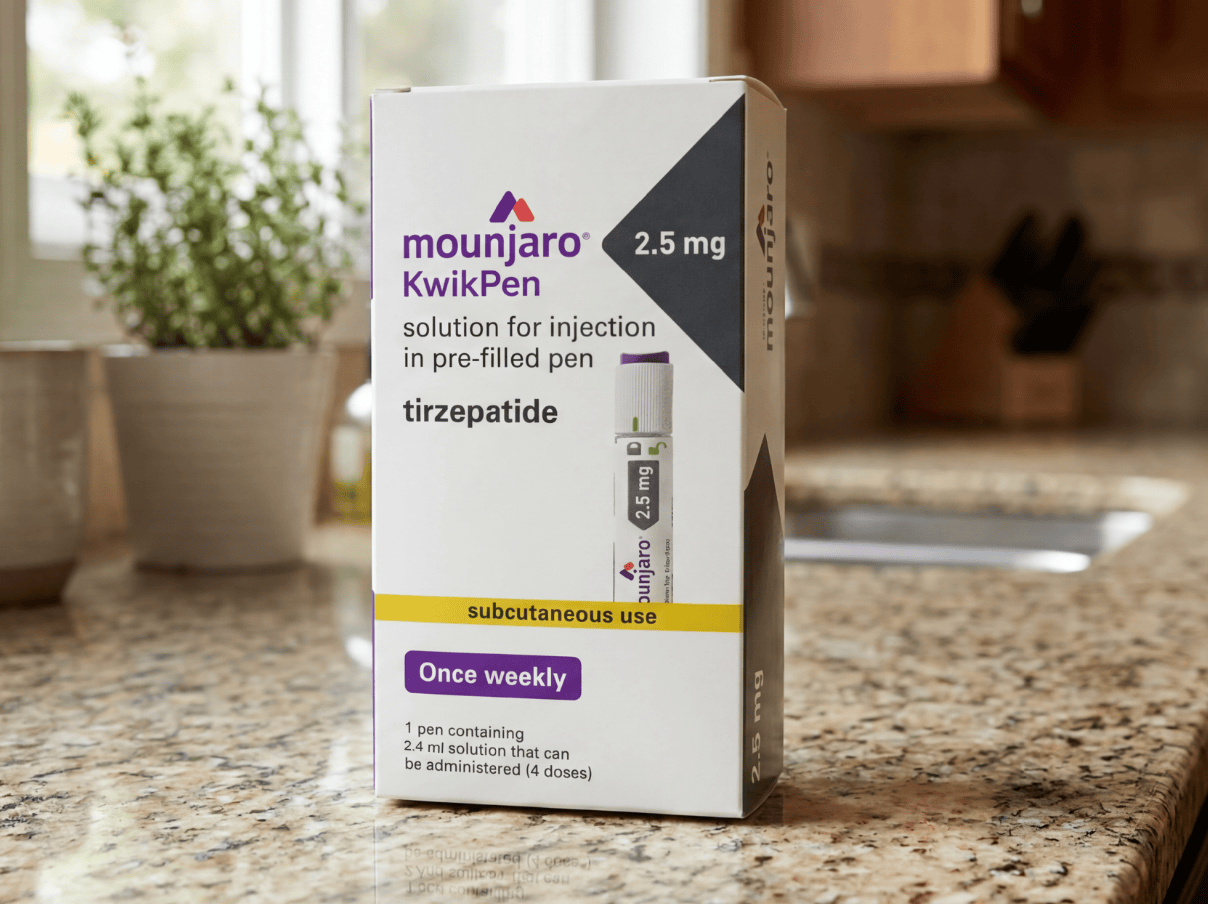
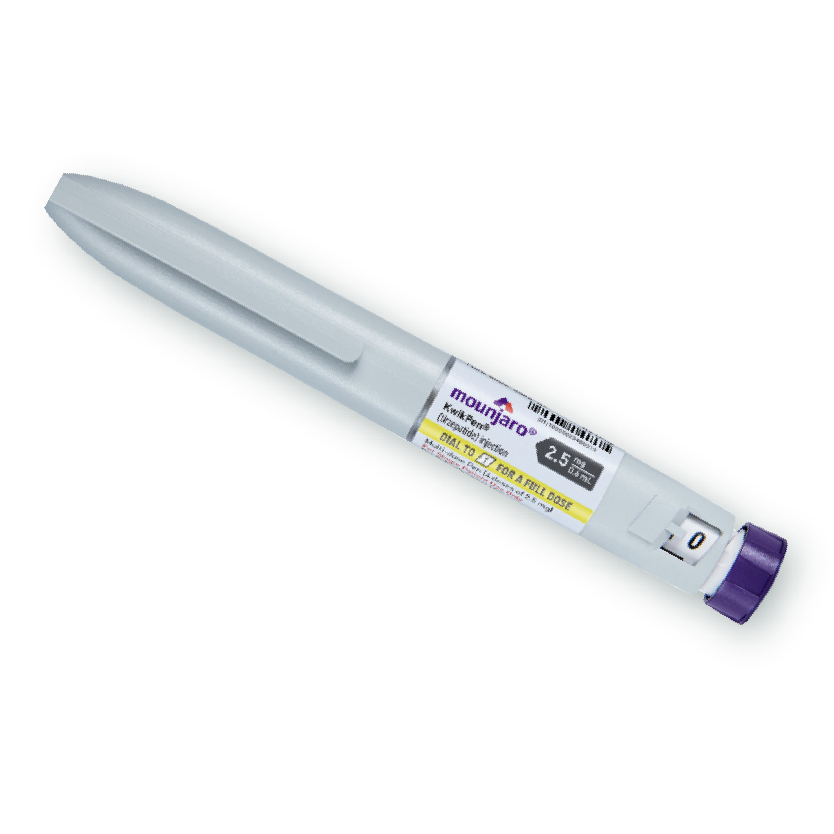
Mounjaro is the brand name for tirzepatide, a prescription medicine given as a once-weekly injection. Tirzepatide is a peptide, meaning it’s a short chain of amino acids engineered to mimic and activate specific hormone receptors in the body.
It is not insulin, and it doesn’t work in the same way as insulin.
This dual action is what makes tirzepatide distinct from earlier weight loss medicines in the same class, and it’s central to understanding how Mounjaro causes weight loss through more than one route.
How does tirzepatide work? The four mechanisms that matter
Tirzepatide’s mechanism of action involves four distinct biological effects. Appetite reduction is one of them, but it works alongside three others.
- Appetite and satiety signalling in the brain. Tirzepatide activates receptors in areas of the brain that regulate hunger and fullness. Most patients find they feel less hungry between meals and feel satisfied sooner when eating. This is the effect that’s most noticeable day to day, and it’s why Mounjaro is often described as an appetite suppressant. But it’s only one part of the mechanism.
- Slower gastric emptying. Tirzepatide slows the rate at which food moves from the stomach into the small intestine. This means meals are digested more gradually, which contributes to a longer-lasting sense of fullness after eating and can reduce overall calorie intake independently of appetite signals in the brain.
- Glucose-dependent insulin secretion. When blood sugar rises after a meal, tirzepatide stimulates the body to release more insulin in response. This helps keep blood glucose levels in a healthy range. Importantly, this effect is glucose-dependent, meaning it’s linked to what you’ve eaten rather than triggering insulin release at all times.
- Lower glucagon levels and improved insulin sensitivity. Tirzepatide also reduces glucagon, a hormone that raises blood sugar, and improves how well the body responds to insulin over time. These effects contribute to broader metabolic changes that go well beyond appetite alone.
Together, these four pathways work in a coordinated way, which is why the clinical results from tirzepatide trials have been notably stronger than those seen with medicines that target only one of these mechanisms.
What is GIP in Mounjaro, and why does it matter?
GIP stands for glucose-dependent insulinotropic polypeptide. It’s a hormone naturally released by the gut after eating, and one of two incretin hormones that tirzepatide is designed to target. The other is GLP-1, glucagon-like peptide-1.
Most weight loss medicines in this class target GLP-1 receptors only. What makes tirzepatide different is that it also activates GIP receptors, which is why it’s described as a dual agonist.
The role GIP plays in tirzepatide’s effects in humans is still being studied. What the research does confirm is that:
- Tirzepatide stimulates glucose-dependent insulin secretion through both GIP and GLP-1 receptor activation
- The dual receptor approach is associated with greater improvements in insulin sensitivity compared to GLP-1-only medicines
- This renewed clinical interest in GIP has opened up new possibilities in how weight and metabolic health are treated together
Why that matters for weight loss results
The reason this biology matters is that it helps explain why the clinical results from tirzepatide are meaningfully different from earlier treatments.
In the SURMOUNT-1 trial, a large placebo-controlled study in adults with obesity or overweight but without diabetes, participants taking tirzepatide lost significantly more weight than those on placebo over 72 weeks.
Individual results vary, and these figures come from a controlled trial setting. Weight loss with Mounjaro depends on dose, individual response, lifestyle factors and how long treatment continues.
What the data does show is that the scale of these outcomes is consistent with a medicine working through multiple pathways, not simply one that makes eating feel less appealing. The combination of appetite effects, gastric slowing and metabolic changes all contribute to the overall result.
Bottom line: is Mounjaro an appetite suppressant?
Mounjaro is not just an appetite suppressant. The appetite changes many patients notice are real, but they’re one effect of a medicine that works across several biological systems at the same time.
To summarise what tirzepatide actually does:
- It’s a peptide medicine, not insulin
- It activates both GIP and GLP-1 receptors, making it a dual agonist
- It reduces appetite and slows gastric emptying
- It improves insulin response and insulin sensitivity
- It lowers glucagon, contributing to broader metabolic effects
Understanding the mechanism doesn’t change the practical experience of taking Mounjaro, but it does help explain why it works as well as it does for many patients.
If you’d like to know whether Mounjaro is suitable for you, get started with our online consultation.
References
- Nauck MA, D’Alessio DA. Tirzepatide, a dual GIP/GLP-1 receptor co-agonist for the treatment of type 2 diabetes with unmatched effectiveness regarding glycaemic control and body weight reduction. Cardiovascular Diabetology. 2022;21:169.
- Forzano I, et al. Clinical perspectives on the use of the GIP/GLP-1 receptor agonist tirzepatide for the treatment of type 2 diabetes and obesity. Frontiers in Endocrinology. 2022;13:1004435.
- Wadden TA, et al. Tirzepatide after intensive lifestyle intervention in adults with overweight or obesity: the SURMOUNT-3 phase 3 trial. Nature Medicine. 2023;29:2909-2918.

