
.png)
Do GLP-1 tablets work? What the clinical trial behind Wegovy tablets shows
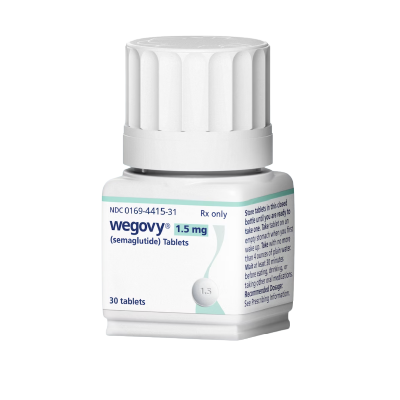
Wegovy has been available as a weekly injection in the UK since 2023, and now there’s a daily tablet too. On 11 June 2026, the MHRA approved the Wegovy tablets, taken once daily for weight management. The same formulation was approved in the US by the FDA in December 2025.
The approval is based on a substantial body of clinical evidence. This article focuses on OASIS 4, the pivotal trial behind the 25mg tablet — the highest strength tablet — and what it tells you about how well the tablet works and what to expect from it.
What is the Wegovy tablet?
Semaglutide is the active ingredient in both Wegovy (for weight loss) and Ozempic (for type 2 diabetes). It works as a GLP-1 receptor agonist, meaning it mimics a hormone your body naturally releases after eating, which helps reduce appetite, slow digestion, and regulate blood glucose.
Until now, semaglutide for weight loss has only been available as a weekly injection — the Wegovy injection. The tablet form uses a technology called SNAC, which protects the drug as it passes through the stomach and allows it to be absorbed through the stomach lining. Without this technology, semaglutide would simply be broken down by stomach acid before it could be absorbed, the same reason most medicines like it are only available as injections.
The Wegovy tablet is taken once daily, escalating from 1.5mg every month usually to a 25mg maintenance dose. It shouldn’t be confused with Rybelsus, an oral semaglutide tablet already available in the UK but at much lower doses and licensed only for type 2 diabetes, not weight loss.
You can read more about the current status of GLP-1 tablets in the UK, including what’s available now and what’s still in development, in our GLP-1 tablets guide.
The OASIS 4 trial: what was studied and why it matters
OASIS 4 is the most clinically relevant trial for patients considering the Wegovy tablet, because it tested the exact 25mg formulation now approved in the UK.
It was a phase 3 randomised, double-blind, placebo-controlled trial — the gold standard for clinical evidence. In plain terms: neither participants nor the researchers assessing them knew who was taking the real medication and who was taking a dummy pill. This design minimises bias and is the most reliable way to determine whether a treatment actually works.
Who took part?
307 adults with obesity or overweight (without type 2 diabetes) took part. To be eligible, participants needed a BMI of 30 or above, or 27 or above with at least one weight-related health condition.
In the trial, participants increased their dose gradually over the first 12 weeks until they reached the 25mg maintenance dose, then continued at that dose to 64 weeks in total.
Note: the MHRA-approved schedule for UK patients escalates through 1.5mg, 4mg, 9mg and 25mg, spending at least a month at each level, so it differs slightly from the trial’s escalation.
A note on how results are reported: You’ll see two sets of figures below. The “all participants” figure includes everyone who enrolled, even those who didn’t complete the trial — a more conservative, real-world measure. The “on-treatment” figure reflects results for those who took the medication consistently throughout. The first is more cautious; the second shows what’s achievable with sustained use.
What did the trial find?
Weight loss results (all participants):
- Average weight loss of 13.6% with oral semaglutide 25mg, versus 2.2% with placebo
- 79.2% of participants lost at least 5% of their body weight, versus 31.1% on placebo
- Nearly 1 in 3 (29.7%) lost 20% or more of their body weight, versus 3.3% on placebo
Weight loss results (on-treatment participants):
- Average weight loss of 16.6% vs 2.7% with placebo
- 34.4% achieved 20% or more weight loss, compared with 2.9% on placebo
What do these numbers mean in practice? A 13.6% weight loss from a starting weight of 100kg means losing around 13–14kg. The 16.6% on-treatment figure means losing closer to 17kg. These are clinically meaningful outcomes, not marginal ones. The fact that nearly 1 in 3 participants lost 20% or more of their body weight is particularly notable.
Beyond weight loss: what else improved
OASIS 4 measured broader health outcomes alongside weight, not just the number on the scales.
- Everyday physical function improved significantly. Participants reported a meaningful improvement in their ability to carry out everyday physical activities, compared with those on placebo.
- Cardiometabolic health improved. Participants saw reductions in BMI, waist circumference, blood triglycerides, and C-reactive protein (a marker of inflammation in the body).
- Pre-diabetes reversed in many participants. 71.1% of participants who had pre-diabetes at the start of the trial had returned to normal blood glucose levels by week 64, compared with 33.3% on placebo. This is a clinically significant finding for patients with elevated blood glucose.
How does this compare to the Wegovy injection? Researchers carried out an indirect comparison between the OASIS 4 tablet results and the STEP 1 injectable trial. The outcomes across key weight loss thresholds and cardiometabolic markers were broadly comparable. In other words, the tablet appears to work about as well as the injection. You’re not trading effectiveness for the convenience of a pill.
What are the side effects?
The side effects of the Wegovy tablet are consistent with what’s already known from the injection. The most commonly reported issues are gastrointestinal, and the majority are mild to moderate, most noticeable during the dose escalation phase as your body adjusts to the medication.
Side effects from OASIS 4 (at the 25mg maintenance dose)
Source: OASIS 4 trial, New England Journal of Medicine, 2025.
These rates are higher than placebo, as you’d expect from an active medication. However, it’s worth putting them in context: adverse events that led to patients stopping treatment were low — 6.9% in the semaglutide group vs 5.9% on placebo. That’s a very small difference, and a sign that the vast majority of participants tolerated the medication well enough to continue. There were no fatal events in either group.
Side effects are typically most pronounced during the dose escalation phase (the first 12 weeks) as the dose increases from 3mg to 25mg. They generally ease once you reach and stabilise at the maintenance dose.
Cardiovascular safety
A broad meta-analysis published in 2025 reviewed 49 semaglutide trials and found that semaglutide (Wegovy) was associated with:
- A 15% reduction in all-cause mortality (meaning people taking semaglutide were 15% less likely to die from any cause than those not taking it)
- A 23% reduction in the risk of heart attack
- A reduction in serious adverse events overall
This cardiovascular data applies to semaglutide (Wegovy) broadly. It’s particularly relevant for patients with existing heart disease who are overweight. The majority of the trials reviewed involved the injectable form, so the long-term cardiovascular picture for the oral tablet specifically is still developing. That said, given both formulations use the same active ingredient and mechanism, the direction of the evidence is considered relevant to both. The injectable form of Wegovy is already licensed in the UK for reducing cardiovascular risk in eligible patients.
What does this mean for patients in the UK right now?
The clinical trial evidence is strong but it’s important to be clear about where things stand in the UK:
- The Wegovy tablet (oral semaglutide 25mg) was approved by the MHRA for weight management on 11 June 2026.
- It is expected to become available via private prescription in the coming weeks, but is not on pharmacy shelves yet.
- It has not yet been assessed for NHS use; that decision will follow the usual NICE cost-effectiveness process. NHS availability, if approved, would likely follow private availability.
The injectable form of Wegovy remains the approved option for weight management in the UK. If you’re eligible and want to start treatment now, Wegovy injections are available through Phlo Clinic with a quick online consultation reviewed by our prescribing pharmacists.
Who might the tablet suit once it’s available?
The OASIS 4 trial didn’t identify a specific group for whom the tablet works better than the injection. The weight loss results were consistent across all BMI subgroups, so the tablet doesn’t appear to work only for people with the highest starting BMI.
In practice, the choice between tablet and injection is likely to come down to personal preference and lifestyle. Some people find injections difficult due to needle anxiety, dexterity issues, or practical factors like travel and refrigeration. An oral option widened access to effective treatment for patients who’ve been reluctant to start an injectable treatment.
Summary of OASIS 4 results
Here’s a quick overview of the key findings from the trial behind the Wegovy tablet:
The bottom line: do GLP-1 tablets work?
Yes. The OASIS 4 trial shows that the Wegovy tablet produces real, clinically meaningful weight loss — around 13.6% on average, rising to roughly 16.6% for people who take it consistently, with nearly one in three losing a fifth or more of their body weight. Just as importantly, it appears to work about as well as the weekly injection, while also improving things like blood sugar, inflammation and everyday physical function. The side effects are the familiar GLP-1 ones, mostly mild-to-moderate stomach symptoms that tend to settle after the first few weeks. In short, a daily pill now offers a genuine, evidence-backed alternative to injections — and with MHRA approval granted in June 2026, it’s set to become available to UK patients via private prescription in the coming weeks.
References
- Rubino DM, et al. Once-Daily Oral Semaglutide for Obesity (OASIS 4). New England Journal of Medicine. Published September 17, 2025. nejm.org/doi/full/10.1056/NEJMoa2500969
- Knop FK, et al. Oral semaglutide 50mg taken once per day in adults with overweight or obesity (OASIS 1): a randomised, double-blind, placebo-controlled, phase 3 trial. The Lancet. 2023;402(10403):705-719. thelancet.com
- Novo Nordisk. Novo Nordisk’s oral semaglutide 25mg (Wegovy in a pill) delivered 16.6% weight loss in people with obesity in a newly published study. Press release, September 2025. globenewswire.com
- Novo Nordisk. Wegovy pill FDA approval. Company announcement, December 2025. novonordisk.com
- Kosiborod MN, et al. The adverse effects associated with semaglutide use: a systematic review and meta-analysis. PubMed Central, November 2025. pmc.ncbi.nlm.nih.gov
- American College of Cardiology. OASIS 4: Significant Weight Loss With Oral Semaglutide. Journal Scan, September 2025. acc.org
