

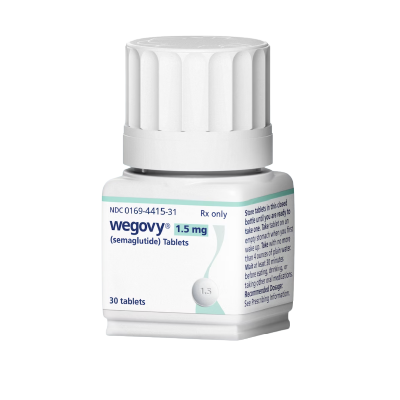
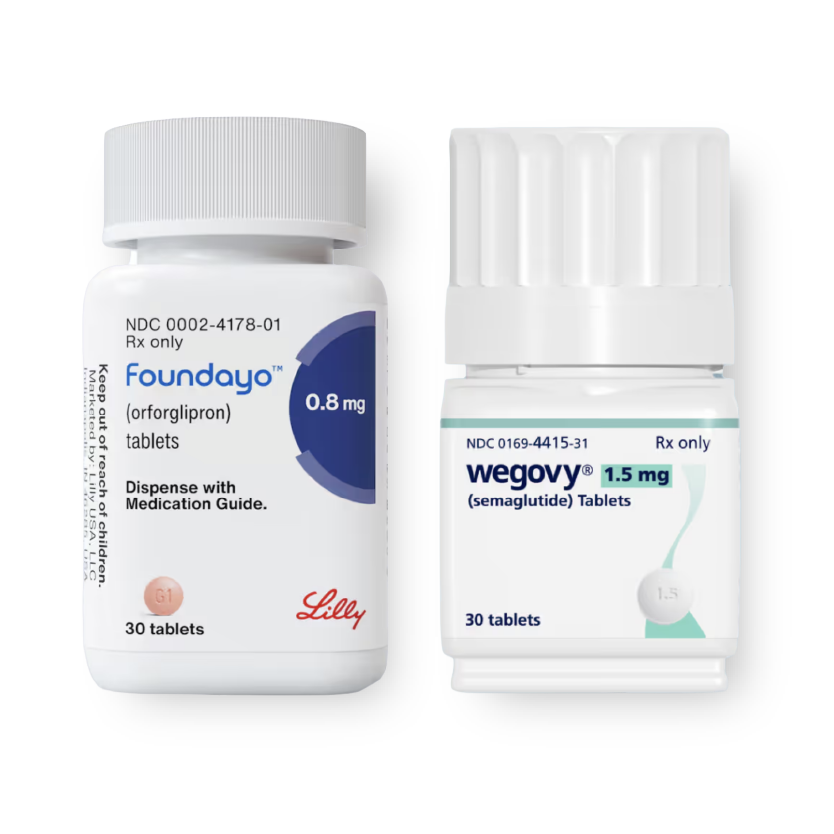
Are Wegovy tablet side effects the same as injections?
Wegovy tablets, licensed for weight management, have now been approved in the UK and are expected to reach patients via private prescriptions in the coming weeks. The question we’re hearing most from patients is a practical one: ‘will the side effects be the same or different to the injections?’ The short answer is that both formats share the same core side-effect profile, because both use the same active ingredient, semaglutide. But the rates at which those side effects appear, and how they feel day to day, can vary depending on which format you take.
In brief: Wegovy tablets and injections have broadly the same GLP-1 side effects, particularly gastrointestinal symptoms. The key differences are in how often those effects occur and how the dosing routine shapes your chance of experiencing side effects, not in the type of medication itself.
Here’s what the evidence shows at a glance:
- Both forms most commonly cause nausea, vomiting, diarrhoea, constipation and stomach discomfort
- Overall rates of gastrointestinal side effects are broadly similar between the two, though vomiting in particular appears somewhat more common with the daily Wegovy 25mg tablet.
- In the trials, the more serious GI reactions were recorded at a slightly lower rate for the tablet than for the injection — though, as explained below, this comes from separate trials rather than a head-to-head study.
The tablet may suit you if you have needle anxiety, a reliable morning routine, or find refrigeration and storage difficult. The injection may suit you better if your current treatment is working, your morning schedule varies, or you have a history of GI sensitivity.
What side effects do both forms have in common?
Because both the tablet and injection use semaglutide, a GLP-1 receptor agonist, they work on the same biological pathways. That means the list of potential side effects are very similar across both formats.
Most side effects are mild to moderate and tend to be most noticeable during the dose escalation phase, when your body is adjusting to the medication. They often ease over time.
These figures are indirect comparisons drawn from separate trials (OASIS programme for the tablet, STEP programme for the injection). They are best read as broad indications rather than precise side-by-side measurements.
A few things are worth unpacking. Overall, the two formats look more alike than different: the total rate of gastrointestinal side effects is roughly the same for both, at around 74%. The clearest difference is vomiting, which appears somewhat more common with the daily tablet.
The more striking finding is around severity. While the tablet edges ahead on vomiting frequency, the trials suggest GI symptoms were less likely to escalate to a serious reaction and led to stopping treatment slightly less often. Importantly, the more serious reactions in the injection trials weren’t a different type of problem — they were the same everyday symptoms (nausea, vomiting, diarrhoea, constipation) that occasionally became serious enough to need medical attention.
Gallbladder-related effects were also reported at slightly higher rates in tablet trial summaries (2.5%) compared with injection trials (1.6%), according to Novo Nordisk safety data. As with the GI comparison above, this figure comes from separate trials rather than a direct head-to-head study, so it is best treated as indicative. It is worth discussing with your prescriber if you have a history of gallbladder issues.
Important: dehydration risk
Persistent nausea and vomiting can lead to dehydration, which in some cases requires medical attention. If symptoms are severe or don’t settle, speak to your prescriber.
Staying hydrated on GLP-1 treatment
It’s worth noting that for both Wegovy injections and tablets, expert nutritional guidance for patients on weight loss medications recommends increased fluid intake of around 2–3L per day, primarily from water, which is slightly higher than the standard recommendation. This is because a reduced appetite can lead to lower fluid intake, and side effects such as nausea, vomiting or diarrhoea may increase the risk of dehydration. Unless your GP or clinical team has advised a fluid restriction (for example, due to heart failure or kidney disease), this is a reasonable target to aim for.
Does one cause more nausea or stomach upset?
This is the question most patients are really asking. The honest answer is that both can cause nausea and stomach upset at broadly similar rates, with vomiting appearing somewhat more common on the high-dose Wegovy tablet (25mg) than the injection.
In the OASIS-4 trial, 74% of participants taking oral semaglutide experienced gastrointestinal side effects, compared with 42% on placebo. Nausea was reported in around 47% of participants and vomiting in around 31%.
For context, those nausea and vomiting rates are close to what’s seen with the injection (roughly 44% and 25%), so the common assumption that a tablet will automatically be gentler than an injection doesn’t really hold up — though it isn’t clearly worse, either. The two are broadly comparable, and severe GI reactions were actually less frequent with the tablet.
It’s also worth noting that reaching the 25mg dose of the tablet is a gradual approach for patients starting their journey. The dose steps up usually every month based on how well you tolerate each strength. Your prescribing pharmacist will work with you and decide when it’s appropriate to increase.
In addition, any discontinuation due to any side effect in OASIS-4 was around 7%, versus about 6% on placebo — a small difference, and a sign that most people tolerated treatment well enough to continue.
What this means in practice: The tablet doesn’t automatically mean a milder experience. Some patients tolerate it well, particularly if they follow the dosing instructions carefully, taking it every day. Others find the GI symptoms harder to manage than they anticipated.
The injection also causes nausea, particularly during dose escalation, but the data consistently points to lower overall rates than high-dose oral semaglutide. According to the STEP trials, nausea with the injection is common but tends to be transient and manageable for most patients.
If GI sensitivity is a concern, it’s worth raising that directly with your prescriber rather than assuming one format will be easier.
Which option is better for weight loss, convenience and sticking with treatment?
Weight-loss outcomes are broadly comparable between the two formats, so the better option usually comes down to which routine a patient can realistically sustain.
How to choose between the GLP-1 tablet or injections?
Neither format is universally better than the other. The right choice depends on your lifestyle, your health history, what you can realistically commit to as well as your weight loss goals.
The tablet may suit you if:
- You’re new to GLP-1 treatment — this offers a weight loss starting point without using a needle
- Needles or self-injection put you off. This can be really common and one of the main reasons patients choose to switch to the tablet. Also, if injecting has led to missed doses, a daily tablet removes that barrier and increases your chances of successful weight loss as you follow the correct dosing
- You’re comfortable with the empty-stomach and 30-minute-wait requirements and can build a consistent morning routine
- Storage or travel is an issue for you as the injection needs to be kept in the fridge and tablets can be stored at room temperature
The injection may suit you if:
- Your current treatment is working. If you’re getting good results on the injection and tolerating it well, there is no need to switch
- A higher dose may be your next step — if you’ve hit a weight loss plateau or it has slowed down, the newly single-pen 7.2mg dose may be a better fit than switching to the tablet
- You want fewer daily decisions and a simpler weekly schedule
- You don’t have a consistent morning routine which suits a fast. The tablet needs to be taken on an empty stomach with a 30-minute wait before food, drink or other medications. If your mornings are early or already busy, that daily window can be harder to stick to than it sounds
- You’ve had GI side effects before as the trials show these are typically higher in tablets than injections so sticking with the injection may be easier to tolerate
If you have a history of gastrointestinal sensitivity, it’s worth discussing both options carefully with your prescriber before deciding. Neither format is automatically the safer choice, and your individual tolerance matters.
The right decision is a clinical one. A prescriber can assess your suitability, walk you through the differences and help you choose the format that fits your life.
Frequently asked questions
Are Wegovy tablets safer than injections?
Neither format has been shown to be categorically safer than the other. Both are clinically reviewed and approved weight loss treatments. In the trials, overall side-effect rates were broadly similar between the two, with vomiting somewhat more common on the tablet, but severe GI reactions were recorded slightly less often with the tablet than the injection. Safety depends on your individual health factors, not the format alone.
Does a tablet mean fewer side effects?
No, not necessarily. High-dose Wegovy 25mg has been associated with higher vomiting than the injection in trials. The tablet isn’t automatically the gentler option that some might assume.
Can you switch between the tablet and injection?
Switching between Wegovy tablets and injection is possible but it needs to be done with clinical guidance. Dosing schedule and absorption differ between formats. Your Phlo Clinic prescribing pharmacist will assist and help determine the best starting dose for you and guide you through the switching protocol.
What should you do if side effects become severe or persistent?
Stop taking the medication and contact your prescriber or GP. Persistent vomiting, severe abdominal pain or signs of dehydration need prompt medical attention. Don’t wait to see if symptoms settle on their own.
Is Wegovy available as a tablet in the UK?
Wegovy tablets have now been approved by the MHRA for weight management, available via private prescription. Wegovy injections remain approved and available in the UK for eligible patients.
If you’re ready to explore Wegovy treatment, we’re here to help. At Phlo Clinic, our prescribing pharmacists review every application individually to assess suitability and support you through the process.
References
- Novo Nordisk. Oral semaglutide 25 mg (Wegovy in a pill): OASIS-4 trial results. BioSpace, 2025. biospace.com
- Wilding JPH, et al. Once-weekly semaglutide in adults with overweight or obesity (STEP 1). New England Journal of Medicine, 2021. nejm.org
- Bhatt DL, et al. Real-world comparison of oral versus injectable semaglutide: adverse events and discontinuation. PMC/PubMed Central, 2025. pmc.ncbi.nlm.nih.gov
- Novo Nordisk. Four new analyses on oral semaglutide 25 mg at ObesityWeek 2025, including severe GI adverse reactions and gallbladder data. PR Newswire, 2025. prnewswire.com
- Iyer NN, et al. Semaglutide. StatPearls, NCBI Bookshelf. ncbi.nlm.nih.gov
- UK Government. GLP-1 receptor agonists and dual GLP-1/GIP receptor agonists: minimising the risk of intestinal obstruction. GOV.UK. gov.uk
- NICE. Draft guidance on type 2 diabetes and GLP-1 receptor agonists, 2025. National Institute for Health and Care Excellence. nice.org.uk
- Novo Nordisk. Wegovy pill demonstrated greater weight loss than orforglipron: indirect comparison presented at Obesity Medicine Association 2026. PR Newswire, 2026. prnewswire.com
- Diabetes Times. Injectable semaglutide uptake among GLP-1RA users in the UK. diabetestimes.co.uk
