
.jpg)
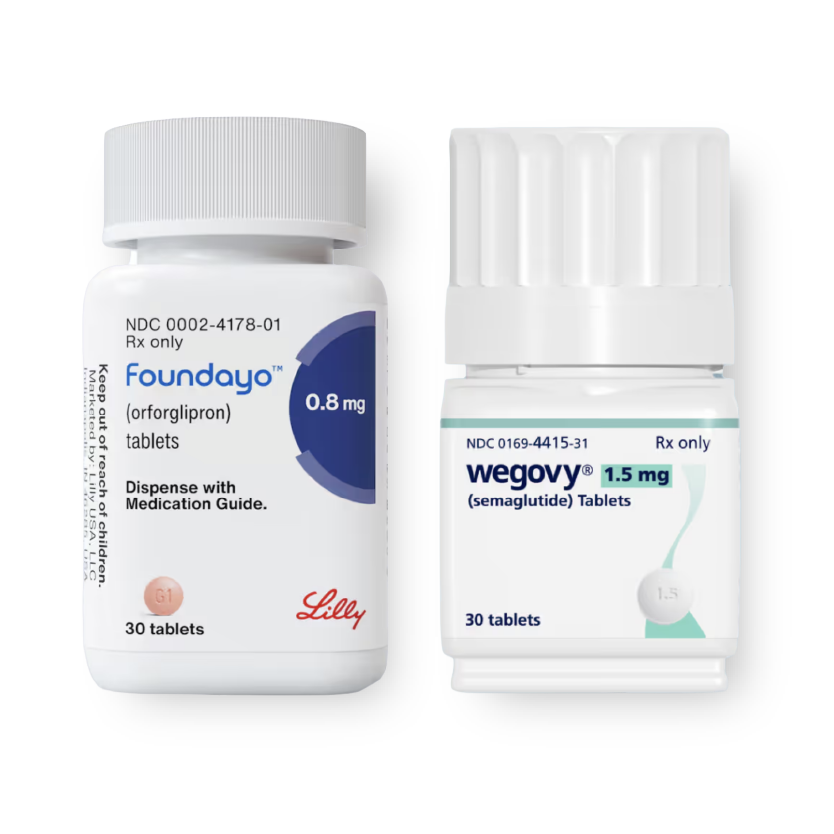
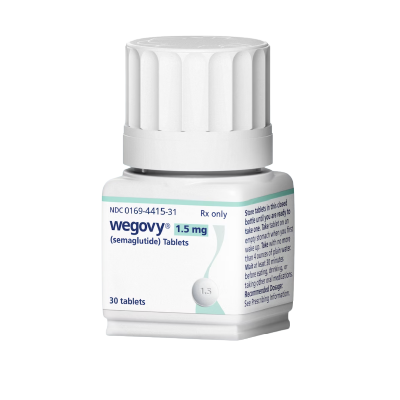
Are Wegovy tablets safer than Wegovy injections?
Wegovy injections (containing semaglutide) have been available in the UK since 2023 and have been the licensed semaglutide treatment for weight loss here. An oral version, sometimes called “Wegovy in a pill”, was developed by Novo Nordisk and received FDA approval in the US in December 2025.
It has now also been approved by the MHRA for use in the UK, and Novo Nordisk expects it to become available via private prescription in the coming weeks.
So if you’ve seen headlines about Wegovy tablets and are wondering whether they’re safer, more convenient, or how to access them, this article gives you a clear picture of what the research actually shows.
Key facts at a glance:
- Wegovy tablets have now been approved by the MHRA, with availability via private prescription expected shortly
- Clinical trials show the safety profile of the tablet to be broadly similar to the injection
- The injection produces slightly better weight-loss results on average, though outcomes are broadly comparable
- Both formulations share the same active ingredient and the same core side-effect profile
What are Wegovy tablets and how do they work?
Semaglutide is the active ingredient in Wegovy. It works by mimicking a hormone called GLP-1, which signals to the brain that you’re full, slows digestion, and reduces appetite. The injection delivers semaglutide directly under the skin once a week. The tablet version works on the same mechanism but is taken orally once a day.
The Wegovy tablet is a separate product developed specifically for weight management. It was approved by the FDA in the US in December 2025 and has now received MHRA approval in the UK.
The Wegovy tablet has been approved in the UK but is not yet on pharmacy shelves. Novo Nordisk has indicated it expects the product to become available via private prescription within weeks. Legitimate UK clinics, including Phlo Clinic, only prescribe treatments that are MHRA-approved, and we’ll offer the Wegovy tablet as soon as it’s available to dispense.
In the meantime, the weekly Wegovy injection remains a licensed semaglutide option for weight loss in the UK.
Are Wegovy tablets safer than the injection?
This is the core question, and the honest answer is: broadly speaking, they’re just as safe as Wegovy injections. They’re different in how they’re delivered, but the safety profile is largely comparable. Both formulations share the same active ingredient, the same mechanism of action, and therefore the same core risks.
What the clinical trial data shows
The key trial to reference here is the OASIS 4 study, published in the New England Journal of Medicine in 2025. This was the pivotal trial for Wegovy tablets in people with obesity, and it provides the most direct evidence on safety and efficacy for the tablet formulation.
Key safety findings from OASIS 4:
- Gastrointestinal (GI) side effects were the most common adverse events, consistent with the injection
- Nausea affected around 46.6% of participants
- Vomiting occurred in approximately 30.9% of participants
- Most GI events were mild to moderate and tended to ease over time
- Serious adverse events were reported in a minority of participants and were broadly in line with the injectable trials. In fact, all-cause serious adverse events were less common on oral semaglutide (around 4%) than on placebo (around 9%)
For comparison, pooled data from the STEP injection trials reported nausea in around 44% of participants, vomiting in around 24%, and diarrhoea in around 30%. The rates are broadly similar, with the high-dose oral tablet potentially producing slightly higher rates of nausea and vomiting, likely because the tablet requires a higher dose to achieve comparable blood levels due to lower bioavailability (explained below).
Interestingly, it’s worth noting that not all GI side effects run higher with the tablet. Diarrhoea was reported in around 24.7% of participants on the tablet compared with approximately 30% on the injection, so the picture varies by symptom rather than being uniformly higher in one direction.
Side effect comparison at a glance
* Constipation was reported in both trial programmes but wasn’t always highlighted as a headline figure. If you experience constipation on either format, speak to your prescribing pharmacist for guidance.
A note on these comparisons. The tablet figures come from OASIS 4 and the injection figures from the STEP programme. These are separate trials, not a single head-to-head study. They’re best read as broad indications rather than precise side-by-side measurements.
The overall safety conclusion from the clinical data is that neither formulation is meaningfully “safer” than the other. The tablet removes the need for injections, which some people find reassuring, but it doesn’t reduce the likelihood of experiencing the GI side effects that are characteristic of this class of medication.
What does bioavailability mean?
This is where the tablet and injection genuinely differ. When you inject semaglutide, it’s absorbed directly into the bloodstream with around 89% bioavailability. When you swallow a tablet, the drug has to survive the digestive process before being absorbed through the stomach lining. Without this technology, semaglutide would simply be broken down by stomach acid before it could be absorbed. This is why it’s only been available in injection form up until now. Oral semaglutide has much lower bioavailability, which is why the strength of the 25mg tablet is needed to achieve blood levels comparable to the 2.4mg injection.
The practical implication is that the tablet requires stricter administration rules. It must be taken on an empty stomach, with no more than 120ml of plain water, and you can’t eat or drink anything else for at least 30 minutes afterwards. This also means not taking any regular medication together with the Wegovy tablets. Missing these steps significantly reduces how much semaglutide is absorbed.
Are Wegovy tablets for everyone?
As with injections, Wegovy tablets aren’t suitable for everyone. It’s not recommended for people who:
- Have a personal or family history of medullary thyroid carcinoma (MTC)
- Have Multiple Endocrine Neoplasia syndrome type 2 (MEN 2)
- Are pregnant or breastfeeding
- Have a history of pancreatitis
- Have severe kidney or liver problems
This is a general guide rather than a complete list. As with all Wegovy prescriptions, a thorough clinical assessment is required before treatment can be approved.
So, are Wegovy tablets safe to use?
Based on the available clinical data, Wegovy tablets and Wegovy injections have a broadly comparable safety profile. Both share the same active ingredient, the same mechanism of action, and the same core side-effect profile — predominantly gastrointestinal symptoms that tend to ease as the body adjusts to treatment.
The tablet removes the need for weekly injections, which for some patients is a meaningful practical benefit. But it introduces its own requirements of a daily fasting window and strict administration rules that must be followed to ensure the medication is properly absorbed.
If you’re eligible for Wegovy treatment, the choice between tablet and injection is a clinical one that depends on your lifestyle, your health history, and what you can realistically sustain. Our prescribing pharmacists can help you work through which option is right for you.
At Phlo Clinic, every application is reviewed individually by one of our qualified prescribing pharmacists, who assess your full medical history to confirm Wegovy is clinically appropriate for you. We do not use automatic approvals and we’ll be offering the Wegovy tablet as soon as it reaches pharmacies to dispense in the UK.
References
- Wharton S, Lingvay I, Bogdanski P, et al. Oral semaglutide at a dose of 25 mg in adults with overweight or obesity. N Engl J Med. 2025;393(11):1077-1087. doi:10.1056/NEJMoa2500969 (OASIS 4 trial)
- Wilding JPH, Batterham RL, Calanna S, et al. Once-weekly semaglutide in adults with overweight or obesity. N Engl J Med. 2021;384(11):989-1002. doi:10.1056/NEJMoa2032183 (STEP 1 trial)
- Medicines and Healthcare products Regulatory Agency (MHRA). Check if a medicine is licensed in the UK. GOV.UK.
- Medicines and Healthcare products Regulatory Agency (MHRA). Wegovy (semaglutide) product information. GOV.UK.
- NHS. Obesity: treatment. NHS.uk.
- Singh G, Krauthamer M, Bjalme-Evans M. Wegovy (semaglutide): a new weight loss drug for chronic weight management. J Investig Med. 2022;70(1):5-13. doi:10.1136/jim-2021-001952
