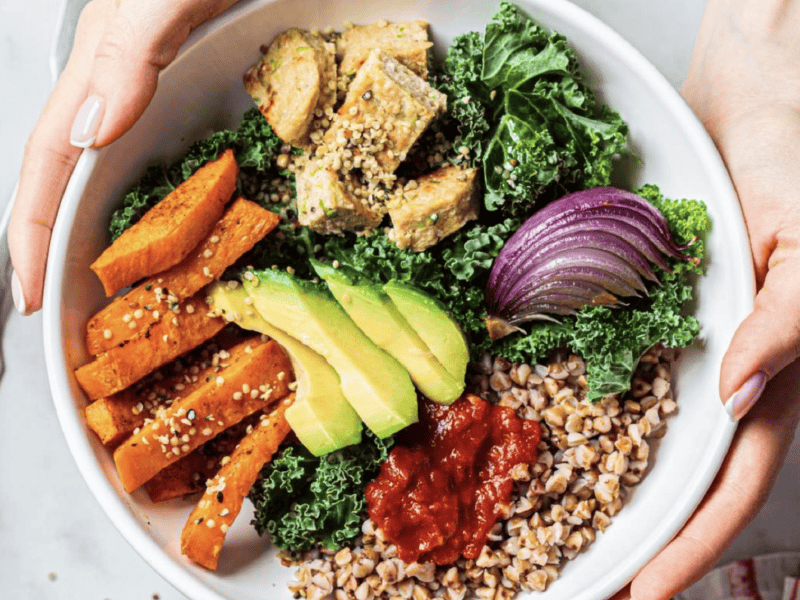
Why diet matters on Mounjaro or Wegovy
Mounjaro (tirzepatide) and Wegovy (semaglutide) reduce appetite, which can support weight management. Vegetarian and vegan diets are fully compatible with these medications, but it’s important to plan meals that provide enough protein, iron, calcium, vitamin B12, fibre, and fluids.
With thoughtful choices, plant-based diets can support energy, muscle health, bone strength, and overall wellbeing, even when appetite is lower (Almandoz et al., 2024; Lv, Qin, & Li, 2025). Including a protein source at each meal, rotating foods to cover key nutrients, and staying well hydrated are simple strategies to maintain nutritional adequacy.
Key nutrients to prioritise
Protein
Protein helps maintain muscle, supports satiety, and contributes to metabolic health. Aim to include a source at each meal and snack.
Sources include:
- Plant-based: lentils, chickpeas, black beans, kidney beans, tofu, tempeh, edamame, seitan, quinoa, nut butters, almonds, walnuts, pumpkin seeds, sunflower seeds, chia seeds, hemp seeds, fortified soya milk or yoghurt.
- Vegetarian (animal-based): eggs, cottage cheese, Greek yoghurt or Skyr, milk, cheese
Tips:
- Fortified soya milk is recommended over other plant-based milks because its protein content is similar to cow’s milk, helping meet daily protein requirements.
- Combine beans with grains (e.g., lentils + rice, hummus + wholemeal pita) for a complete amino acid profile.
- Protein shakes or plant-based meat alternatives can supplement meals on lower-appetite days but work best alongside whole foods.
Iron
Iron is essential for energy and oxygen transport. Eating iron-rich foods at most meals helps maintain energy levels and prevent deficiency.
Sources include:
- Plant-based: lentils, chickpeas, black beans, kidney beans, tofu, tempeh, edamame, quinoa, pumpkin seeds, spinach, kale, broccoli, dried apricots, raisins, fortified cereals
- Vegetarian (animal-based): eggs
Tip: Pair iron-rich foods with vitamin C-rich foods (e.g., bell peppers, citrus fruits, tomatoes, kiwi, berries) to improve absorption. Including a variety of iron-rich foods throughout the week helps ensure adequate intake even if portions are small.
Calcium
Calcium is vital for bone strength, muscle function, and overall skeletal health.
Good sources include:
- Plant-based: fortified soya milk (preferred for protein content), fortified soya yoghurt, calcium-set tofu, almonds, tahini, chia seeds, sesame seeds, leafy greens (kale, bok choy, broccoli), figs, fortified cereals
- Vegetarian (animal-based): dairy milk, yoghurt, cheese
Tip: Yoghurt (dairy or fortified soya) provides both protein and calcium in one serving, which is particularly helpful when appetite is reduced.
Vitamin B12
Vitamin B12 is essential for nerve function, red blood cell formation, and energy metabolism. Deficiency can cause fatigue, weakness, and neurological issues, so it’s especially important for vegetarians and vegans, particularly when overall food intake is lower.
Sources:
- Vegetarians: eggs, dairy products, cheese, and fortified foods such as fortified plant milks, fortified soya yoghurt, and fortified breakfast cereals
- Vegans: cannot get enough B12 from unfortified plant foods; a reliable B12 supplement is essential. Fortified nutritional yeast or fortified plant milks can contribute but are not sufficient alone.
Advice:
- Take a supplement daily or weekly, following dosage instructions on the product.
- Include fortified foods for extra support, especially on days when appetite is low.
- Consider regular B12 status monitoring with a healthcare professional for long-term vegans or those with low intake.
Fibre
Fibre supports digestion, bowel regularity, and satiety. Including a variety of fibre-rich foods every day helps prolong fullness and supports digestive health.
Good sources include:
- Vegetables: broccoli, spinach, kale, carrots, zucchini, peppers, tomatoes
- Fruits: apples, pears, berries, oranges, bananas, kiwi, dried fruit
- Legumes: lentils, chickpeas, beans, peas
- Whole grains: oats, quinoa, brown rice, wholegrain bread, wholewheat pasta
- Nuts & seeds: almonds, chia seeds, flaxseeds, pumpkin seeds
Even small portions can contribute meaningfully when paired with protein.
Hydration
Adequate fluid intake supports digestion and nutrient absorption. Aim for 2–3 litres per day, including:
- Water
- Herbal teas
- Decaffeinated tea or coffee
- Soups or broths
- Diluted fruit juice
- Fortified soya milk or low-fat cow’s milk
Tip: Limit caffeinated drinks as caffeine can reduce appetite. Herbal teas and decaf options provide hydration without affecting intake.
Practical meal ideas
Planning balanced meals makes it easier to meet nutrient needs even when appetite is low.
Breakfast
- Overnight oats with fortified soya or dairy milk, chia seeds, berries, and nut butter
- Smoothie with fortified soya yoghurt or milk, banana and oats
Lunch
- Wholemeal wrap with hummus, roasted vegetables, and leafy greens
- Quinoa and chickpea salad with spinach, cucumber, and lemon dressing
Dinner
- Stir-fried tofu or tempeh with mixed vegetables and brown rice
- Lentil and sweet potato chilli with a side salad
Snacks
- Edamame
- Carrot sticks with hummus
- A small handful of nuts or seeds
- Fortified yoghurt or a small protein shake
Rotate foods across the week to cover protein, iron, calcium, and fibre.
You can read more about how to create a balanced snack here.
Foods to be mindful of
No foods need to be completely avoided, but prioritising whole, minimally processed foods helps maintain fullness and nutrient intake. Limit ultra-processed vegetarian or vegan options that are low in protein and high in refined carbohydrates, as well as sugary drinks, sweets, and highly salted packaged foods. Focus on adding nourishing foods first, rather than restriction.
Vegetarian and vegan diets are fully compatible with Mounjaro or Wegovy. Key strategies for meeting nutrient needs include:
- Include protein at each meal and snack
- Rotate foods to cover iron, calcium, and fibre
- Use fortified plant foods and B12 supplements as needed
- Drink 2–3 litres of fluids daily
- Use protein shakes or plant-based meat alternatives as supplements, not replacements
With simple planning, plant-based eating can support weight management, energy levels, muscle and bone health, and overall wellbeing while using GLP-1 medications.
References
Almandoz, J. P., Snel, M., & Gadde, K. M. (2024). Nutritional considerations with anti-obesity medications. Obesity, 32(1), 3–17. https://pubmed.ncbi.nlm.nih.gov/38853526/
Lv, M., Qin, Y., & Li, J. (2025). Effects of vegetarian or vegan diets on glycemic and cardiometabolic health: A systematic review. Nutrition Reviews, 83(2), 200–215. https://pubmed.ncbi.nlm.nih.gov/40037300/
British Dietetic Association. (2021). Vegetarian, vegan and plant-based diets. https://www.bda.uk.com/resource/vegetarian-vegan-plant-based-diet.html