

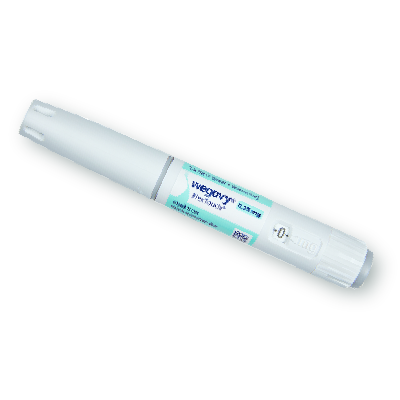
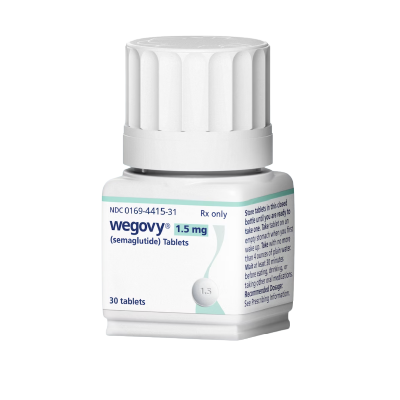
What is Wegovy?
Wegovy is a prescription weight loss medication that contains semaglutide, a drug used to help people with obesity or overweight manage their weight alongside lifestyle changes such as diet and physical activity. Semaglutide belongs to a class of medicines called GLP-1 receptor agonists. These medications mimic a natural hormone called glucagon-like peptide-1 (GLP-1), which helps regulate appetite and blood sugar levels.
Wegovy works by:
- Reducing appetite and increasing feelings of fullness
- Slowing stomach emptying
- Helping regulate blood sugar
By influencing hunger signals in the brain, Wegovy can help people reduce calorie intake and achieve sustainable weight loss. The medication has been approved for chronic weight management by regulators including the UK’s MHRA (Medicines and Healthcare products Regulatory Agency). This is equivalent to the U.S. Food and Drug Administration (FDA).
However, Wegovy carries a black box warning related to thyroid health. Animal studies found an increased risk of a rare thyroid cancer called medullary thyroid carcinoma (MTC). For this reason, Wegovy should not be used in individuals with ca personal or family history of MTC or with Multiple Endocrine Neoplasia syndrome type 2 (MEN2).
What is hyperthyroidism?
Hyperthyroidism occurs when the thyroid gland produces too much thyroid hormone, causing the body’s metabolism to speed up. The thyroid gland sits in the front of the neck and produces hormones that regulate metabolism, heart rate, and body temperature. When hormone levels become too high, this can affect many bodily systems.
Common symptoms of hyperthyroidism include:
- Unintentional weight loss
- Rapid or irregular heartbeat
- Anxiety or irritability
- Sweating and heat intolerance
- Tremors
- Fatigue or muscle weakness
Several conditions can cause hyperthyroidism. The most common is Graves’ disease, an autoimmune disorder that causes the thyroid to produce excess hormones. Other causes include thyroid nodules or inflammation of the thyroid gland. Although hyperthyroidism may lead to weight loss, it can also cause unpredictable appetite and metabolic changes, meaning it does not necessarily result in healthy or sustained weight management.
Can you use Wegovy with hyperthyroidism?
Having hyperthyroidism does not automatically mean you cannot take Wegovy, but a clinical assessment is important before starting treatment. If hyperthyroidism is well controlled or successfully treated, a clinician may still consider prescribing Wegovy if the patient meets the criteria for weight-loss medication.
Healthcare professionals will usually evaluate; the underlying cause of hyperthyroidism, whether thyroid hormone levels are stable, current medications used to treat the condition and any thyroid nodules or abnormalities. Because Wegovy has safety warnings related to thyroid health, clinicians typically ensure thyroid conditions are appropriately managed and monitored before prescribing it.
Why are thyroid disorders a consideration for prescribing Wegovy?
Thyroid disorders are considered when prescribing Wegovy because the thyroid plays an important role in regulating metabolism. Before treatment begins, clinicians may review thyroid function and medical history to ensure the medication is safe. Key considerations include monitoring thyroid function, as people with thyroid conditions may require monitoring of TSH, T3, and T4 levels before and during treatment. It is also important to assess thyroid disease history as certain thyroid conditions, including medullary thyroid carcinoma (MTC) and MEN2 syndrome, are contraindications to using Wegovy.
Identifying potential risk factors e.g. patients with thyroid nodules, abnormal thyroid tests, or a family history of thyroid cancer may require additional evaluation. Assessing thyroid health helps clinicians determine whether Wegovy is an appropriate treatment option.
What clinical studies have shown on thyroid health and Wegovy
Clinical trials studying semaglutide for weight management have monitored thyroid function to assess potential risks. Overall, research suggests that semaglutide does not significantly affect thyroid hormone levels in most patients. In large clinical trials, thyroid function tests generally remained stable during treatment.
The concern around thyroid cancer comes primarily from rodent studies, where GLP-1 receptor agonists caused thyroid C-cell tumours. This effect has not been clearly demonstrated in humans, but the warning remains as a precaution.
As a result:
- Wegovy should not be used in patients with a history of medullary thyroid carcinoma.
- Patients are advised to report symptoms such as neck swelling, hoarseness, or difficulty swallowing.
Ongoing research continues to monitor the long-term safety of GLP-1 medications.
Can I take Wegovy with hyperthyroidism medication?
People with thyroid disorders may take medications to regulate thyroid hormone levels, and these treatments may need to be considered when prescribing Wegovy. For example, some patients take levothyroxine, a medication used to replace or regulate thyroid hormone levels. There is no confirmed direct interaction between Wegovy and levothyroxine, but monitoring may still be required as weight loss can affect thyroid hormone requirements, meaning medication doses may need adjustment.
Additionally, GLP-1 medications slow stomach emptying, which could potentially affect how some medicines are absorbed, for this reason, clinicians may monitor thyroid hormone levels and symptoms and adjust medication doses if necessary.
Is there a risk of thyroid cancer if I take Wegovy?
Wegovy carries a warning about the potential risk of medullary thyroid carcinoma (MTC). Animal studies showed that semaglutide caused thyroid C-cell tumours in rodents. However, studies in humans have not confirmed the same risk.
Despite this, Wegovy should not be used in individuals who:
- Have a personal or family history of medullary thyroid carcinoma
- Have Multiple Endocrine Neoplasia syndrome type 2 (MEN2)
Patients taking Wegovy should contact a healthcare professional if they notice symptoms such as; a lump in the neck, persistent hoarseness, difficulty swallowing or shortness of breath. Clinicians may investigate thyroid nodules or abnormal symptoms if they arise during treatment.
How Phlo Clinic assess whether someone can be prescribed Wegovy with hyperthyroidism
At Phlo Clinic, prescribing decisions are made following a careful clinical assessment to ensure weight-loss treatments are appropriate and safe. Before prescribing Wegovy, clinicians evaluate several aspects of thyroid health.
We review patient’s medical history, where patients are asked about previous thyroid diagnoses, treatments, and any family history of thyroid cancer. Clinicians may also review blood tests such as TSH and thyroid hormone levels to confirm thyroid function is stable. Patients are also screened for conditions that make Wegovy unsuitable, including medullary thyroid carcinoma and MEN2 syndrome. Any medicines used to manage thyroid conditions are also considered to ensure they can be safely taken alongside Wegovy.
This process helps ensure Wegovy is prescribed safely and appropriately for individuals seeking support with weight management.
References
- Novo Nordisk. Wegovy (semaglutide) Summary of Product Characteristics (SmPC). Available at: https://www.medicines.org.uk/emc/product/13801. Accessed March 2026.
- U.S. Food and Drug Administration (FDA). Wegovy (semaglutide) injection prescribing information. Available at: https://www.accessdata.fda.gov. Accessed March 2026.
- Wilding JPH, Batterham RL, Calanna S, et al. Once-weekly semaglutide in adults with overweight or obesity. New England Journal of Medicine. 2021;384:989–1002. doi:10.1056/NEJMoa2032183.
- National Institute for Health and Care Excellence (NICE). Semaglutide for managing overweight and obesity. Available at: https://www.nice.org.uk/guidance/ta875. Accessed March 2026.
- NHS. Overactive thyroid (hyperthyroidism). Available at: https://www.nhs.uk/conditions/overactive-thyroid-hyperthyroidism/. Accessed March 2026.
- Mayo Clinic. Hyperthyroidism (overactive thyroid): symptoms and causes. Available at: https://www.mayoclinic.org/diseases-conditions/hyperthyroidism. Accessed March 2026.
- Davies M, Færch L, Jeppesen OK, et al. Semaglutide 2.4 mg once weekly in adults with overweight or obesity (STEP trials). The Lancet. 2021;397(10278):971–984.
- American Thyroid Association. Thyroid nodules and thyroid cancer information. Available at: https://www.thyroid.org. Accessed March 2026.
.png)