

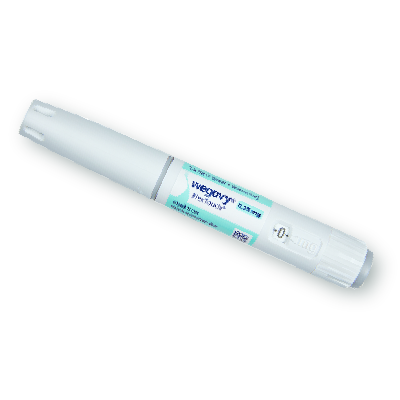
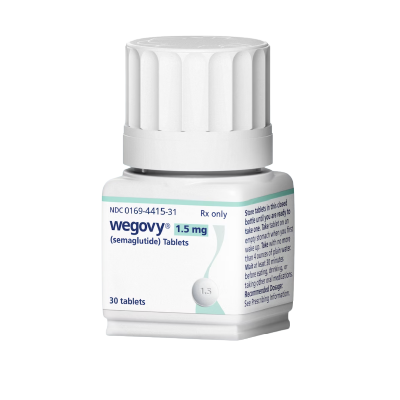
Wegovy tablets vs weight loss injections: are the pills as effective?
For anyone who's been putting off weight loss treatment because of a fear of needles, the arrival of the Wegovy tablet feels like genuinely good news. The world's first oral GLP-1 medication approved for weight loss launched in the United States in January 2026, and a UK application is currently under review by the Medicines and Healthcare products Regulatory Agency (MHRA), with a decision expected by late 2026.
But the obvious question is: does a pill actually work as well as an injection?
The short answer: clinical trial data suggests the Wegovy tablet produces weight loss results very close to the injectable version, and significantly better than anything previously available in pill form. The longer answer involves understanding what the data does and doesn't tell us, and where Mounjaro still has an edge.
This article breaks down what the science shows, what's still unknown, and what UK patients can realistically expect.
What is the Wegovy tablet?
The Wegovy tablet contains semaglutide, the same active ingredient found in the Wegovy injection and in Ozempic. Semaglutide is a GLP-1 receptor agonist, meaning it mimics a hormone your gut naturally releases after eating. That hormone signals to your brain that you're full, slows digestion, and reduces appetite.
What's different about the tablet is the way your body absorbs it. Unlike injections which go directly under the skin, the tablet has to pass through the stomach first. Because semaglutide is delicate, Novo Nordisk uses a special ingredient called SNAC to help protect it and improve absorption into the body.
This helps the medication work effectively, but it also means the tablet needs to be taken in a specific way to get the best results. Read on to find out more.
How to take the Wegovy tablet correctly
The tablet must be taken daily on an empty stomach, first thing in the morning, with no more than 120ml of plain water. After taking it, patients must wait at least 30 minutes before eating, drinking anything else, or taking other oral medicines. Even a small amount of food or drink during this window significantly reduces how much semaglutide the body absorbs.
This is a meaningful practical difference from the injection, which is taken once weekly with no food restrictions. For some patients, a daily morning routine will feel manageable. For others, the 30-minute fasting window may be an inconvenience.
The dosing schedule starts at 1.5mg daily and increases gradually every 30 days, up to a maximum of 25mg daily.
What does the clinical evidence say?
The FDA approval of the Wegovy tablet was based on the results of the OASIS-4 phase 3 clinical trial, a 64-week study involving 307 adults with obesity or overweight and at least one weight-related health condition.
Key finding from the OASIS-4 trial: Adults taking the 25mg daily tablet lost an average of 16.6% of their body weight over 64 weeks, compared to 2.7% for those taking a placebo.
That's a significant result. For context, 76% of participants on the tablet achieved at least 5% body weight loss, versus 31% on placebo. One in three patients lost 20% or more of their body weight.
There's an important nuance in how that headline figure is reported. The 16.6% figure applies to patients who stayed on treatment throughout the trial. When looking at all participants regardless of whether they continued, the average weight loss was 13.6%. Both figures are clinically meaningful, but it's worth understanding the distinction when comparing across studies.
How does that compare to the Wegovy injection?
There hasn't been a direct head-to-head trial comparing the tablet to the injection, so comparisons rely on data from separate studies conducted under different criteria and conditions.
The honest takeaway: the Wegovy tablet is broadly comparable to the standard-dose injection, but it doesn't yet match the higher-dose injectable options or Mounjaro in terms of average total weight loss seen across clinical trials over a set period of time. Individual results and treatment suitability will always vary, and every weight loss journey looks different depending on your body, lifestyle and goals.
Side effects: is the pill easier to tolerate?
The side effects profile is largely the same as the injection.
In the OASIS-4 trial, the most common adverse reactions were:
- Nausea
- Diarrhoea
- Vomiting
- Constipation
These are consistent with the known side effect profile of GLP-1 medications as a class, and they're typically most pronounced during the dose escalation phase. The gradual dose increase schedule (stepping up every 30 days) is designed to help the body adjust and minimise these effects.
There's no clinical evidence suggesting the tablet causes fewer or more severe side effects than the injection. The route of administration differs, but the drug and its mechanism are the same.
Wegovy pill vs injection: which is right for you?
The clinical effectiveness data is close enough that for many patients, the choice between pill and injection will come down to lifestyle fit rather than efficacy alone.
The case for the tablet
- No needles. For patients with a needle phobia or significant anxiety around injections, the pill removes a genuine barrier to treatment.
- Discreet. A daily tablet is easier to take privately than a weekly injection, particularly when travelling or in shared living situations.
- Familiar format. Many people are already accustomed to taking daily medication and find tablets easier to incorporate into a routine.
The case for the injection
- Once weekly. The injection is taken just once a week with no dietary restrictions around timing. There's no daily 30-minute fasting window to manage.
- Stronger options available. Higher-dose injectable Wegovy (semaglutide) and Mounjaro (tirzepatide) produce greater average weight loss than the tablet, which matters for patients with a higher starting weight or more ambitious targets.
- More real-world data. Millions of patients globally have used injectable semaglutide since 2021. The tablet's long-term real-world outcomes are still being established.
Can you switch from injection to Wegovy pills?
For patients currently using Wegovy or Mounjaro injections and considering switching to the tablet once it becomes available, the decision should be made with a prescribing clinician. If injections are working well, there's no clinical reason to switch. If needle anxiety, adherence issues, or lifestyle factors are making injections difficult to sustain, the tablet could become a valuable alternative.
When will the Wegovy tablet be available in the UK?
Novo Nordisk submitted the Wegovy tablet to the European Medicines Agency (EMA) and other regulatory authorities, including the MHRA, in the second half of 2025. The FDA approved it in the US on 22 December 2025, and it launched there in January 2026.
The UK's post-Brexit regulatory process means the MHRA conducts its own independent review rather than automatically following EMA decisions. A final decision is expected by late 2026, though no confirmed date has been announced.
Once approved, private pharmacy clinics would likely be able to offer it relatively quickly. NHS availability will take longer, as the NHS will need to assess whether the tablet offers sufficient additional benefit over the injectable version already in use.
What this means for UK patients right now: if you're ready to start a medically supported weight loss programme today, the injectable options remain the only licensed GLP-1 treatments available for weight management in the UK. The tablet is coming soon.
Is the Wegovy tablet a suitable alternative to the injections?
The Wegovy tablet is a genuine step forward. It's the first oral GLP-1 treatment approved for weight loss, and its clinical results are competitive with the standard-dose Wegovy injection. For patients who've been reluctant to try injections, it could eventually open up access to a class of treatment that has transformed weight management over the past few years.
But it's not a straight upgrade on injections. The daily dosing routine and 30-minute fasting window add friction that the once-weekly injection doesn't. And for patients who need maximum efficacy, higher-dose Wegovy and Mounjaro injectables still produce meaningfully greater weight loss.
The practical reality for UK patients is straightforward: the tablet isn't available just yet, and it won't be for some time. If weight management is a priority now, the injectable options are the evidence-backed, clinically proven route available today.
If you'd like to explore whether a medically supported weight loss treatment is right for you, our prescribing pharmacists can assess your suitability and guide you through the options currently available. Find out more about Wegovy at Phlo Clinic.
References
- Knop FK, et al. Oral semaglutide 50 mg taken once per day in adults with overweight or obesity (OASIS 1): a randomised, double-blind, placebo-controlled, phase 3 trial. Lancet. 2023;402(10403):705-719. OASIS-4 phase 3 trial results: NEJM1)
- Wilding JPH, et al. Once-weekly semaglutide in adults with overweight or obesity. N Engl J Med. 2021;384(11):989-1002. PubMed
- Jastreboff AM, et al. Tirzepatide once weekly for the treatment of obesity. N Engl J Med. 2022;387(3):205-216. PubMed
- Novo Nordisk. FDA approval announcement: Wegovy (semaglutide) tablets 25mg, 22 December 2025. PR Newswire
- Medicines and Healthcare products Regulatory Agency (MHRA). mhra.gov.uk
- European Medicines Agency (EMA). ema.europa.eu
.png)