

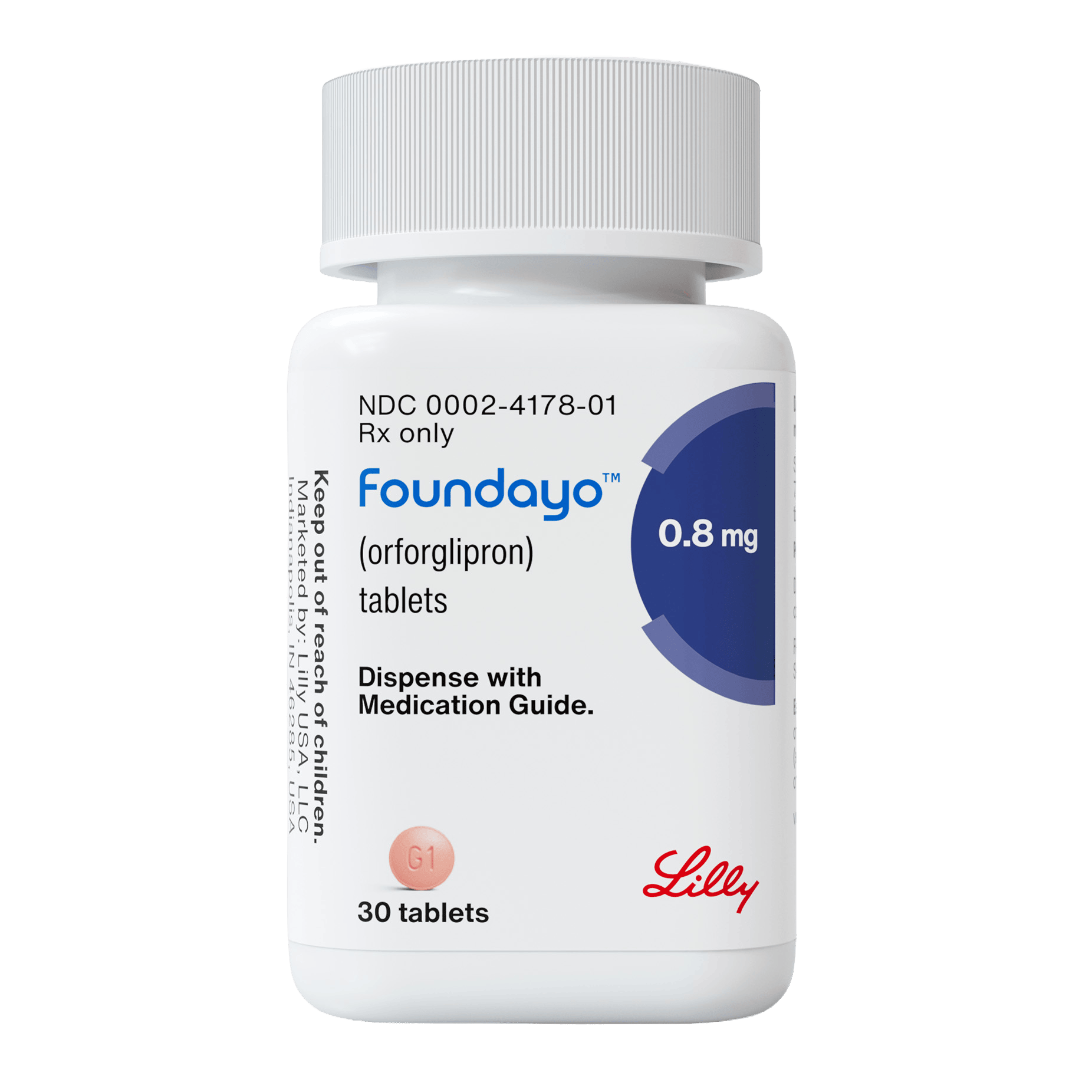
One of the main reasons orforglipron (brand name Foundayo) has attracted attention is how simple it is to take. It is a once-daily tablet with no injections, and unlike the Wegovy tablet, it does not need to be taken on an empty stomach or followed by a fasting window.
This guide covers how the tablet is taken, what the dose schedule looks like, and what to do if you miss a dose.
Important: orforglipron is not yet licensed in the UK. It is currently under review by the MHRA. The dosing information below reflects how the medicine is licensed in the United States, where it was approved in April 2026. UK dosing is expected to follow a similar structure, but this cannot be confirmed until the MHRA approval.
The basics: how orforglipron is taken
- Once a day, every day. Orforglipron is a daily tablet, not a weekly injection.
- At any time of day. There is no requirement to take it first thing in the morning.
- With or without food. You do not need an empty stomach, and there is no waiting period before eating or drinking.
- Swallow the tablet whole. Do not crush, chew or split it.
- At roughly the same time each day. Consistency helps keep levels of the medicine steady and makes the habit easier to maintain.
That last point is a recommendation rather than a strict rule. Unlike the Wegovy tablet, where taking it incorrectly can significantly reduce how much medicine your body absorbs, orforglipron is absorbed reliably regardless of food.
How this differs from the Wegovy tablet
If you have researched oral GLP-1 options, you may have come across the strict rules that apply to the Wegovy tablet. It must be taken on an empty stomach, with no more than a small sip of plain water, followed by a 30-minute wait before eating, drinking anything else, or taking other medicines.
Orforglipron does not carry those requirements. This is a factual difference in how the two medicines are absorbed, not an indication that one is more effective than the other.
The orforglipron dose schedule
Like all GLP-1 treatments, orforglipron is started at a low dose and increased gradually. This is called titration, and it exists to give your body time to adjust and to reduce the likelihood of side effects, particularly nausea and digestive discomfort.
Each step lasts at least 30 days before any increase is considered.
Orforglipron dosage schedule
In the United States, orforglipron is available in six tablet strengths.
Based on US licensing. UK dosing, if approved, is likely to follow a similar structure, though this has not been confirmed.
Not everyone needs to reach the highest dose. Some patients settle at a lower maintenance dose and stay there, which is a perfectly normal outcome rather than a sign that treatment is not working.
Always follow your prescriber's instructions. The schedule above is a general guide based on US licensing. Your own dose, and the pace at which it increases, will be set by your prescriber based on your individual response and tolerability. If their instructions differ from any general schedule you read online, follow theirs.
What to do if you miss a dose
Missing an occasional dose will not undo your progress. The guidance is straightforward:
- Do not take two doses to make up for one you have missed.
- Simply continue with your next scheduled dose at your usual time.
- If you miss several days in a row, speak to your prescriber. You may need to restart at a lower dose and titrate up again, rather than resuming at the dose you were on.
- If you are missing doses regularly, speak to your prescriber. Inconsistent dosing can affect how well the treatment works.
If you find you are regularly forgetting, it is worth anchoring the tablet to something you already do at the same time each day or setting a daily phone reminder. Because there are no food restrictions, orforglipron is more flexible in this respect than the Wegovy tablet.
Taking orforglipron with other medications
Before starting orforglipron, tell your prescriber about everything you take. That means:
- prescription medicines
- anything you buy over the counter
- vitamins and supplements
There are two reasons this matters:
Absorption of other tablets. Orforglipron slows down how quickly your stomach empties, which can change how well your body absorbs some other tablets you take by mouth.
Direct interactions. A small number of specific medicines interact with orforglipron directly. Your prescriber may need to adjust a dose or the timing of when you take things.
You do not need to work this out yourself. Sharing a full list of what you take lets your prescriber flag anything that needs adjusting. One common example, the contraceptive pill, is covered in its own section below.
If you take the contraceptive pill
Orforglipron can make the contraceptive pill less reliable, because it can affect how well the pill is absorbed. To stay protected, either switch to a non-pill method of contraception, or use condoms as a backup:
- for 30 days after you start orforglipron, and
- for 30 days after each time your dose increases
Non-pill methods that are not swallowed, such as an implant, injection, patch, ring or coil, are not affected. Speak to your prescriber or pharmacist about which option is right for you.
Pregnancy and breastfeeding
Orforglipron should not be taken during pregnancy or while breastfeeding. Weight loss offers no benefit during pregnancy and the medicine could harm your baby, so stop taking it immediately if you find out you are pregnant.
If there is any chance you could become pregnant, use reliable contraception while taking it. If you are planning to try for a baby, speak to your prescriber first so you can plan when to stop.
Side effects during dose increases
The most common side effects reported in trials were gastrointestinal, including nausea, diarrhoea, vomiting, constipation and indigestion. These are usually mild to moderate, are most likely when starting treatment or moving up a dose, and tend to settle over time.
A few practical things help:
- eat smaller, more frequent meals
- avoid rich, fatty or very large meals
- stay well hydrated
- follow the titration schedule your prescriber has set rather than increasing early
If side effects are difficult to manage at a particular dose, tell your prescriber. They may recommend staying at your current dose for longer before increasing, rather than moving up on schedule. This is a normal adjustment, not a setback. Do not stop taking orforglipron without speaking to your prescriber first, even if side effects are uncomfortable.
If you vomit shortly after taking your tablet, do not take a replacement dose. Contact your prescriber for advice on what to do next.
Seek urgent medical advice if you experience: severe or persistent abdominal pain (possible pancreatitis), signs of dehydration, or an allergic reaction.
When will orforglipron be available in the UK?
Orforglipron is under MHRA review and cannot be legally prescribed or dispensed in the UK until that concludes. Based on typical review timelines, private availability is realistically expected between late 2026 and early 2027, though that could change depending on the progression for approval.
References
- Eli Lilly. Orforglipron prescribing information (US).
- Eli Lilly. ATTAIN phase 3 clinical trial programme.
- Medicines and Healthcare products Regulatory Agency (MHRA).

