
Being told you need to lose weight before you can start fertility treatment is a difficult thing to hear. It can feel like an extra obstacle placed in front of something that already feels out of reach, and often with a time pressure attached that makes it harder still.
If that’s where you are, this guide covers what the weight limits actually are, why they exist, and whether a GLP-1 weight loss treatment could realistically help you get there.
In short
Most UK fertility clinics require a BMI below 30 for IVF, though thresholds vary and private clinics are often more flexible.
GLP-1 treatments like Mounjaro and Wegovy can produce the kind of weight loss that gets people under those thresholds, and losing weight may improve fertility in its own right.
You must stop treatment before trying to conceive. GLP-1 medicines are not safe in pregnancy, and the timing needs planning with your prescriber and fertility clinic together.
What are the weight limits for IVF in the UK?
There’s no single national rule, which is part of why this is confusing.
On the NHS, NICE guidance recommends that women have a BMI between 19 and 30 before starting IVF. In practice, funding decisions sit with local Integrated Care Boards, and criteria vary considerably between areas. Some apply the BMI 30 limit strictly, others differ. Your GP or fertility clinic can tell you what applies where you live.
Private clinics set their own criteria. Many will treat patients with a BMI up to 35, and some go higher, though it varies between clinics. Most clinics will discuss weight as part of your assessment regardless, along with your overall health, age and treatment history. They may also ask you to lose a certain amount of weight first even where you technically fall within their limit, if they judge it would improve your chances.
Because there’s no single standard, two clinics can give you different answers about the same BMI. It’s worth asking directly what their BMI limit is and if you’ve been turned away by one, it’s worth asking others.
Why the limits exist
Being told to lose weight before treatment can start is genuinely hard. It can also feel like a judgement rather than a clinical decision, particularly for anyone who has struggled with weight for years or who has a condition like PCOS that affects fertility and makes losing weight harder at the same time. But it’s worth acknowledging why the limits exist.
There are clinical reasons behind it. A higher BMI is associated with lower response to ovarian stimulation, meaning fewer eggs are typically retrieved. It’s also linked to lower implantation and live birth rates, and to increased risks during pregnancy itself, including gestational diabetes, pre-eclampsia and complications at delivery. Some procedures are technically more difficult too, including egg retrieval and embryo transfer.
None of that means treatment can’t work at a higher BMI. It means the odds shift, and clinics set thresholds where they judge the balance of benefit and risk sits.
Why is weight loss good for fertility?
Weight influences fertility through its effect on hormones rather than through weight itself.
Excess body fat can raise insulin levels, and insulin resistance disrupts the hormonal signals that control ovulation. It also increases androgen production, which can interfere with regular cycles. The result, for some women, is irregular ovulation or none at all.
Women with type 2 diabetes are more likely to experience irregular cycles and take longer to conceive, and poorly controlled blood glucose is associated with higher miscarriage risk and increased complications in pregnancy. This is why fertility clinics often want to see stable glucose control alongside a target BMI, rather than weight alone.
It affects men too. Obesity and metabolic conditions are associated with reduced sperm quality, including lower counts and motility, and weight loss has been shown to improve those parameters. Type 2 diabetes is also linked to reduced sperm quality and to erectile dysfunction, both of which can affect conception.
The encouraging part is that this works in both directions. Even modest weight loss, often cited as around 5–10% of body weight, can restore more regular ovulation in women who weren’t ovulating consistently, particularly where PCOS is involved.
Where GLP-1 treatment fits
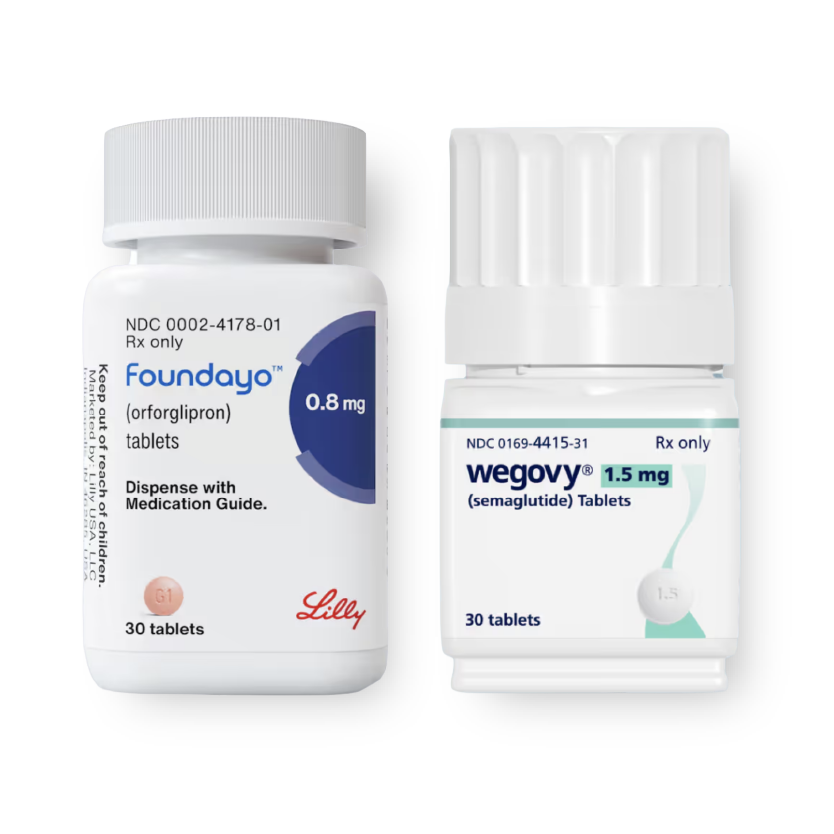
GLP-1 medicines including Mounjaro (tirzepatide) and Wegovy (semaglutide) as injection or tablets, work by mimicking hormones your gut releases after eating, reducing appetite and slowing digestion. In clinical trials they produce substantially more weight loss than diet and exercise alone.
For someone who needs to lose a meaningful amount of weight to reach a clinic’s threshold, and who has tried without treatment before, that can be the difference between qualifying and not.
Two things are worth being realistic about.
It takes time. Weight loss treatment starts at a low dose and increases gradually over several months. Meaningful weight loss typically builds over months rather than weeks, and you then need to stop treatment and allow a washout period before trying to conceive. If you’re working to a deadline (an age-related funding cut-off, for instance) that timeline needs planning from the start.
It isn’t a fertility treatment. GLP-1 medicines are licensed for weight management, not fertility. Any benefit to your chances comes indirectly, through the effects of weight loss itself. They aren’t prescribed to improve IVF outcomes, and shouldn’t be understood that way.
"My BMI has dropped dramatically, which has made my fertility goals possible."
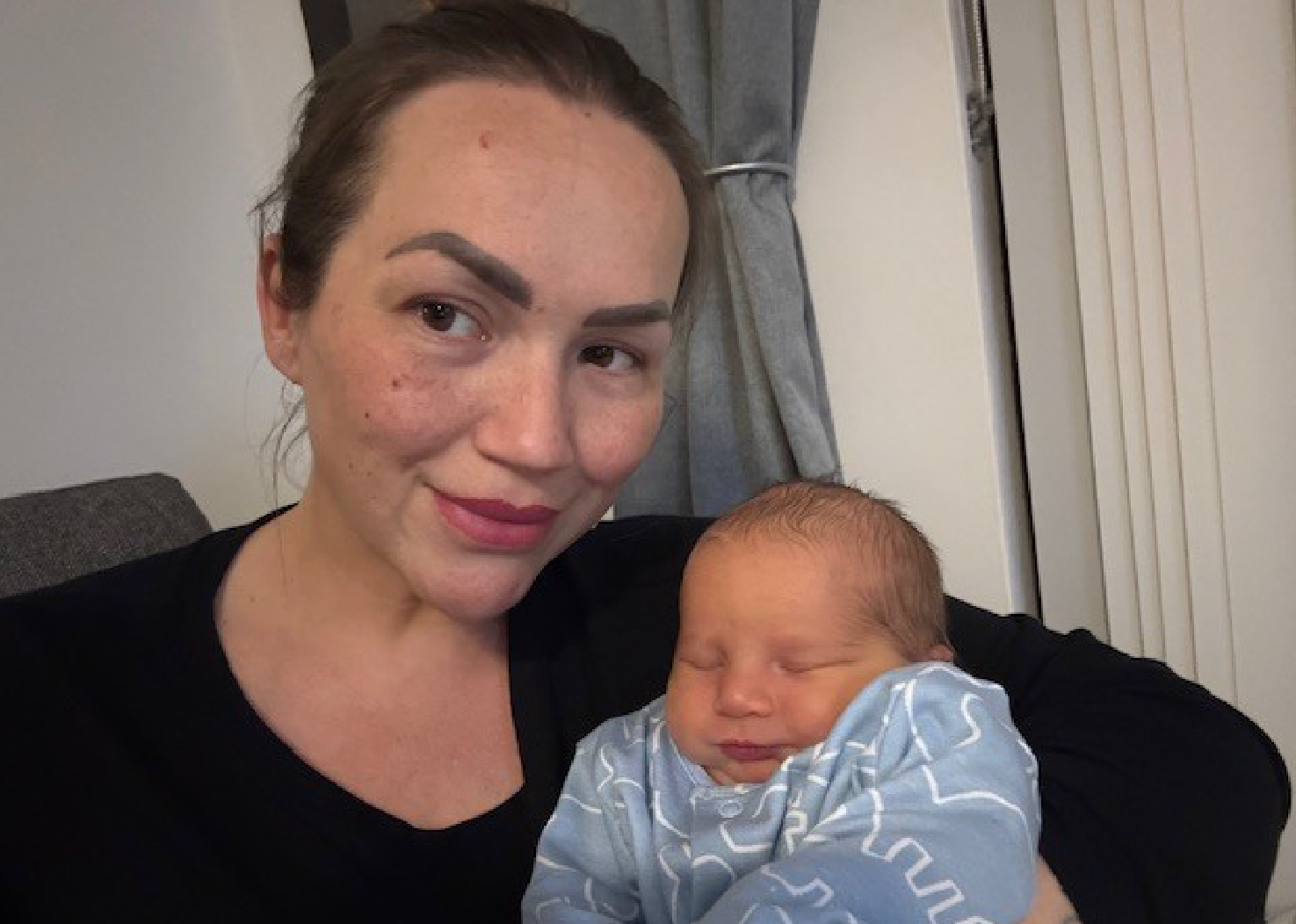
Kristis came to Phlo Clinic for weight loss treatment to help her with her goal: to reach a healthy BMI so she could qualify for IVF.
She reached the healthy BMI she needed and, once there, came off treatment to begin the next stage.*
In October 2025, Kristis welcomed her baby boy, Freddie.
"My main motivation for losing weight was to address fertility issues, improve my general health, and build my confidence, and it’s been an incredible journey."
* Individual results vary. Kristi’s experience is her own and is not a guarantee of outcome.
When you need to stop before trying to conceive
This is the most important thing to know before you start.
GLP-1 treatments are not safe to use in pregnancy. Animal studies have shown potential harm to the developing baby, and there is no safety data supporting use in human pregnancy. You must stop before you start trying.
How long you need to stop for depends on which treatment you’re on. To allow the medicine to clear from your system, the current guidance recommends the following timelines to stop treatment before trying to conceive:
- Mounjaro (tirzepatide) — 1 month
- Wegovy (semaglutide), tablets and injections — 2 months
- Foundayo (orforglipron) — 3 weeks
Check which applies to you and plan backwards from there. If you’re working to a fixed IVF date, the two-month washout for Wegovy in particular needs building into your timeline early.
If you’re going through IVF, the timing needs coordinating between your prescriber and your fertility clinic. Embryo transfer, egg retrieval and stimulation cycles all sit at fixed points, and your washout period needs to fit around them rather than the other way round. Tell both teams what the other is doing.
If you discover you’re pregnant while taking a GLP-1 treatment, stop immediately and contact your prescriber and GP.
A note on contraception
This catches people out. Mounjaro and Foundayo can reduce the effectiveness of the oral contraceptive pill, because it slows how quickly your stomach empties and affects absorption. Guidance is to use a barrier method for four weeks after starting, and for four weeks after each dose increase.
That matters here because a pregnancy you weren’t planning yet, while still on treatment, is the situation everyone wants to avoid.
If you have PCOS
PCOS is one of the most common causes of fertility difficulty, and it’s also where the link between weight, insulin and ovulation is clearest.
Most women with PCOS have some degree of insulin resistance, meaning the body produces more insulin to achieve the same effect. Those raised insulin levels stimulate the ovaries to produce more androgens (testosterone and related hormones). It’s that excess that interferes with the normal hormonal sequence needed for an egg to mature and be released, which is why periods can become irregular or stop altogether. Improving insulin sensitivity can help break that cycle, and weight loss is one of the main ways to do it, which is why it’s often the first thing suggested.
GLP-1 medicines improve insulin sensitivity directly, through their effect on how the body handles glucose, and indirectly through weight loss. Lower insulin levels mean less stimulus for androgen production, which can allow the normal ovulation cycle to re-establish itself.
Some women with PCOS find their cycles become more regular during treatment, and that ovulation resumes where it had been absent or unpredictable. Research in PCOS specifically has focused mainly on weight loss rather than on GLP-1 medicines directly, but the mechanism is well understood and improvements in insulin sensitivity are consistently associated with better ovulatory function.
Two caveats. GLP-1 medicines are not licensed for PCOS, so this would be an off-label consideration your prescriber would need to discuss with you. If your cycles become more regular on treatment, pregnancy can become more likely. If you’re not ready yet to conceive, contraception matters more during treatment, not less. At the same time, Mounjaro and Foundayo can both reduce the effectiveness of the oral contraceptive pill, because they slow how quickly your stomach empties and affect how well the pill is absorbed.
Together, that means someone with PCOS starting either Mounjaro or Foundayo (orforglipron), could be more likely to ovulate while also being less well protected.
If you use oral contraception, you may therefore be advised to use an additional barrier method, or to switch to a non-oral method, for a period of time. Please follow the contraception advice specific to your treatment. Your prescriber or patient information leaflet will confirm how long this applies for. Non-oral methods such as implants, injections, patches, rings and coils aren’t affected, as they don’t rely on being absorbed through the stomach, so they continue to work as normal.
This matters because GLP-1 medicines aren’t safe to use in pregnancy. An unplanned pregnancy while still on treatment is the situation to avoid, and it’s more likely in exactly the group this section is about.
What the research does and doesn’t show
The evidence base for GLP-1 medicines specifically in fertility is limited. What’s well established is that obesity is associated with reduced fertility and poorer IVF outcomes, that weight loss can improve ovulation and sperm quality, and that GLP-1 medicines produce significant weight loss.
What isn’t yet established is whether losing weight with a GLP-1 medicine specifically improves IVF success rates compared with losing the same weight another way. Studies looking directly at this are ongoing, and there’s no good data yet on longer-term reproductive outcomes.
The honest position is that the case rests on weight loss being beneficial for fertility, and GLP-1 medicines being an effective way to achieve weight loss. That’s a reasonable basis for a decision on whether to start weight loss treatment. It isn’t the same as evidence that these medicines improve fertility outcomes directly.
Things to be aware of
Losing weight too quickly can disrupt your cycle. Body fat plays a role in oestrogen production, and rapid loss can lower oestrogen enough to cause irregular or missed periods and interrupt ovulation, which is the exact opposite of what you’re aiming for. If that happens, tell your prescriber; adjusting the pace usually resolves it.
Eating too little causes problems of its own. GLP-1 medicines reduce appetite significantly, and not getting enough calories, protein or key nutrients can contribute to cycle irregularity. Eating well matters as much as eating less.
Weight can return after stopping. Some people regain weight once treatment stops, which is relevant if there’s a gap between finishing treatment and starting IVF. Worth discussing how you’ll maintain your weight through that window.
What to do next
If weight is standing between you and fertility treatment, the useful first step is finding out exactly what threshold applies to you. Your GP or fertility clinic can confirm it.
From there, a consultation with a prescriber will establish whether weight loss treatment is clinically appropriate, and how the timeline would work around your treatment plans.
At Phlo Clinic, every application is reviewed individually by a qualified prescribing pharmacist. If you’re planning fertility treatment, tell us at consultation, it may change how we’d approach your treatment plan and when you’d need to stop.
References
- National Institute for Health and Care Excellence. Fertility problems: assessment and treatment (CG156). Available at: nice.org.uk
- Human Fertilisation and Embryology Authority. Explore fertility treatments. Available at: hfea.gov.uk
- Medicines and Healthcare products Regulatory Agency / electronic Medicines Compendium (emc). Mounjaro KwikPen — Summary of Product Characteristics. Available at: medicines.org.uk
- Medicines and Healthcare products Regulatory Agency / electronic Medicines Compendium (emc). Wegovy 2.4 mg, FlexTouch — Summary of Product Characteristics. Available at: medicines.org.uk
- Jastreboff, A.M. et al. (2022). Tirzepatide Once Weekly for the Treatment of Obesity (SURMOUNT-1). New England Journal of Medicine. 387:205–216. Available at: nejm.org

