
Explore what current evidence says about Mounjaro and eye health, including vision changes, diabetic retinopathy, and safety guidance.
What is Mounjaro (Tirzepatide)
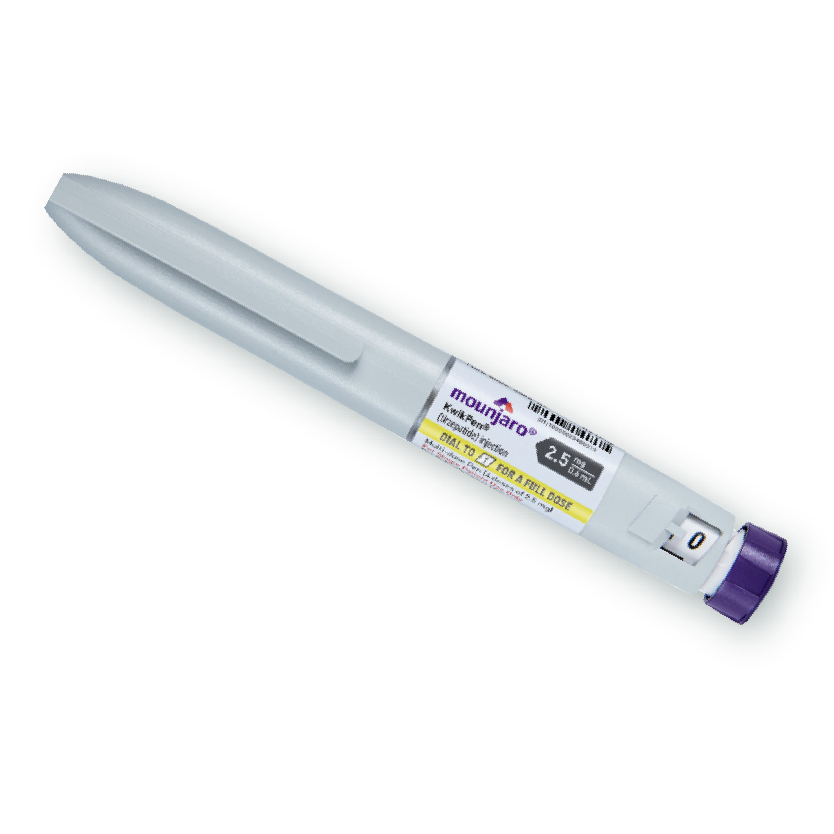
Mounjaro is a GIP and GLP-1 receptor agonist (GLP-1 RA) medication. That means it mimics two natural hormones (GIP and GLP-1) that help control blood glucose levels and reduce appetite.
Its dual action helps the body use insulin more effectively while helping you feel full after smaller meals.
How Mounjaro may affect ocular blood vessels
Mounjaro does not directly harm the eyes; however, it may have indirect effects on the small blood vessels of the retina and optic nerve. These effects can occur due to factors such as rapid changes in blood sugar, which can temporarily stress retinal vessels, mild dehydration that may reduce blood volume and retinal blood flow, and minor fluctuations in blood pressure that can decrease circulation to the retina and optic nerve. These changes are most likely when starting or adjusting Mounjaro.
Individuals with diabetes, high blood pressure, or existing eye conditions may be at higher risk, so maintaining good hydration, stable blood glucose control, and regular eye examinations can help protect vision (2), (3).
Impact of Mounjaro on intraocular pressure
Current evidence does not indicate that Mounjaro directly increases intraocular pressure (5).
While intraocular pressure (IOP) has not been a specific end point in tirzepatide studies, research involving related GLP-1 receptor agonists suggests any observed changes in eye pressure are small and clinically modest (6).
Risk Factors Affecting Intraocular Pressure (2),(3),(7),(8).
- Pre-existing Eye Conditions
- Glaucoma: People who already have glaucoma have pressure in the eye that is higher or less stable than normal. Small changes in the body, such as shifts in blood sugar, mild dehydration, or changes in blood pressure, can sometimes place extra strain on the optic nerve.
- Macular oedema: This involves fluid build-up in the retina. Changes in fluid levels within the eye can affect overall eye pressure and balance, which may make the eyes more sensitive to changes happening elsewhere in the body
- Other Factors
- Blood pressure changes: Sudden drops in blood pressure can reduce blood flow to the optic nerve and affect the normal fluid balance inside the eye.
- Rapid changes in blood glucose: Large swings in blood glucose can cause temporary fluid shifts within the eye, which may briefly affect eye pressure.
- Dehydration: Not drinking enough fluids can lower blood volume and disrupt the eye’s fluid balance, sometimes changing eye pressure or placing short-term strain on the eye’s blood vessels.
- Lifestyle & Medications
- Some medications: Certain steroid medicines or decongestants can increase eye pressure in some people.
- Caffeine and stress: Very high caffeine intake or periods of significant stress may cause small, temporary rises in eye pressure.
Potential effects on retinal blood flow
Large clinical studies of tirzepatide (known as the SURPASS programme) did not find eye damage or retinal problems to be a common side effect of treatment. There was no evidence that the medication directly affected blood flow to the retina. Rates of new or worsening diabetic eye disease were low and similar to those seen with other treatments (9).
Relationship between rapid blood sugar changes and eye health
Rapid changes in blood glucose levels can have a temporary impact on eye health. When glucose levels rise or fall quickly, fluid shifts within the eye can alter the shape of the lens, leading to blurred or fluctuating vision.
In people with diabetes, sudden improvements in blood glucose control may also temporarily worsen existing diabetic retinopathy. These effects are usually transient and tend to stabilise as blood glucose levels become more consistent (10). However, regular eye screening and prompt medical review are essential if visual changes are sudden, severe, or persistent.
Diabetic retinopathy (DR) and the impact of Mounjaro
Diabetic retinopathy is a long-term complication of diabetes caused by high blood sugar damaging the small blood vessels and nerves in the retina, the part of the eye responsible for vision (11).
Current evidence does not show a significant direct association between the use of GLP1 agonists and deterioration of existing retinopathy (4). In several different studies the incidence of DR associated with the use of GLP1 is very low but it’s important to note. However, there is a gap in the research regarding long-term effects on the retina and people with moderate or severe retinopathy were often excluded from these studies (12). More studies combining clinical trial data with research on how these drugs work are needed to understand their impact on eye health over time (13).
If you already have diabetes-related eye problems, regular eye checks remain essential.
Risk factors for worsening retinopathy during treatment
Even though GLP-1 receptor agonists like Mounjaro are generally safe for the eyes, some people may experience temporary worsening of diabetic retinopathy (DR).
Risk factors include:
- High baseline blood sugar and rapid reduction – a sudden drop in HbA1c can stress retinal blood vessels (14).
- Pre-existing DR or long diabetes duration – already fragile vessels are more vulnerable (15).
- Advanced stage of retinopathy – people with more severe DR at baseline have higher risk (16).
- Other vascular risk factors – poor long-term glucose control, high blood pressure, or abnormal cholesterol may increase susceptibility (17).
Other eye issues that may be impacted by Mounjaro use
- Reports of vision loss or impairment - there is no evidence that Mounjaro causes blindness. In some cases, people may experience blurred vision, usually due to fluctuations in blood glucose as the body adjusts to treatment (19). Serious or sudden vision problems are uncommon, but medical advice should be sought straight away if they occur to ensure any potential complications are properly assessed.M
- Macular oedema concerns - some people may worry about macular oedema. Research has looked at whether GLP-1 medications, like Mounjaro, could influence the risk of neovascular (wet) age-related macular degeneration, a related retinal condition. So far, no study has proven that GLP-1 medications cause wet AMD. Overall, the absolute risk is extremely low (20).
- Optic nerve implications - Mounjaro has not been shown to directly damage the optic nerve, and serious eye complications are very uncommon. Overall, the absolute risk is very low, and no direct evidence indicates that Mounjaro itself causes optic nerve damage.
- Dry eye and surface issues - dry eyes aren’t a listed side effect of Mounjaro in the SPC (1), but some people taking it for weight loss notice dryness, irritation, or a gritty feeling. This is usually indirect — for example, nausea, reduced appetite, or lower fluid intake can cause mild dehydration, which can dry out the eyes. Changes in metabolism and blood sugar, even in people without diabetes, may also temporarily affect tear production.
Most of the time, symptoms are mild and short-lived and can be relieved with good hydration, screen breaks, and preservative-free artificial tears. Persistent or worsening eye symptoms should be checked by a healthcare professional.
Clinical Studies and Evidence
Current research on Mounjaro (tirzepatide) and eye-related effects is limited, and most clinical trials have not identified direct ocular toxicity or significant changes in intraocular pressure. Reported vision changes are uncommon and are generally indirect, often related to rapid improvements in blood glucose, especially in people with pre-existing diabetic eye conditions.
Despite recent media attention, including high-profile reports such as those involving Robbie Williams, there is no evidence that Mounjaro causes permanent vision loss or serious eye damage. While ongoing ophthalmic monitoring and routine diabetic eye screening remain important, patients can be reassured that, when used as directed, Mounjaro is considered safe for the eyes, and temporary visual changes are usually manageable and resolve as blood sugar stabilises.
References
- Electronic Medicines Compendium. (2023). Mounjaro 2.5 mg–15 mg solution for injection in pre-filled pen (tirzepatide) – Summary of Product Characteristics.
- Flammer, J., Orgül, S., Costa, V.P., et al. (2001). The impact of systemic circulation on ocular blood flow. Progress in Retinal and Eye Research, 20(6), 629–648.
- Hayreh, S.S. (2004). Ocular blood flow and systemic factors. Progress in Retinal and Eye Research, 23(3), 299–335.
- Sadeghi, E., Rahmanipour, E., Valsecchi, N., Kapoor, S., Cicinelli, M.V., Chhablani, J. (2025). An update on ocular effects of antidiabetic medications. Survey of Ophthalmology, 70(4), 704–712.
- Chuang, C.C., Wang, K., Chang, C.K., Lee, C.Y., Huang, J.Y., Wu, H.H., Yang, P.J., Yang, S.F. (2024). Prescription of glucagon-like peptide 1 agonists and risk of subsequent open-angle glaucoma in individuals with type 2 diabetes mellitus. International Journal of Medical Sciences, 21(3), 540–546.
- Hallaj, S., Halfpenny, W., Chuter, B.G., Weinreb, R.N., Baxter, S.L., Cui, Q.N. (2025). Association between glucagon-like peptide-1 receptor agonists exposure and intraocular pressure change. American Journal of Ophthalmology.
- Arnold, A.C. (2004). Ischemic optic neuropathy. New England Journal of Medicine, 351, 539–546.
- Diabetes UK. (n.d.). Eyes and Diabetes.
- Rosenstock, J., et al. (2021). Efficacy and safety of tirzepatide (LY3298176) in patients with type 2 diabetes (SURPASS 1). The Lancet.
- Akil, H., Burgess, J., Nevitt, S., et al. (2022). Early worsening of retinopathy in type 1 and type 2 diabetes after rapid improvement in glycaemic control: a systematic review. Diabetes Therapy, 13, 1–23.
- BMJ Best Practice. (n.d.). Diabetic retinopathy.
- Eli Lilly and Company. (2025). What is the incidence of diabetic retinopathy in people with type 2 diabetes (T2D) receiving Mounjaro (tirzepatide)?
- Kapoor, I., Sarvepalli, S.M., D’Alessio, D., Grewal, D.S., Hadziahmetovic, M. (2023). GLP‑1 receptor agonists and diabetic retinopathy: A meta-analysis of randomized clinical trials. Survey of Ophthalmology, 68(6), 1071–1083.
- Bethel, M.A., Diaz, R., Castellana, N., Bhattacharya, I., Gerstein, H.C., Lakshmanan, M.C. (2021). HbA1c change and diabetic retinopathy during GLP‑1 receptor agonist cardiovascular outcome trials: A meta-analysis and meta-regression. Diabetes Care, 44(1), 290–296.
- Lin, D.S., Lo, H.Y., Huang, K.C., Lin, T.T., Lee, J.K., Lin, L.Y. (2024). Incidence and progression of diabetic retinopathy in patients treated with glucagon-like peptide-1 receptor agonists versus sodium-glucose cotransporter 2 inhibitors: A population-based cohort study. Diabetes, Obesity and Metabolism, 26(10), 4386–4396.
- Vujosevic, S., Toma, C., Ferrulli, A., De Cillà, S., Nucci, P., Luzi, L. (2025). New generation agents for glycemic control and diabetic retinopathy progression: What we need to know? Acta Diabetologica, 62(10), 1573–1583.
- Mahzari, M.M., Alanazy, A.M., Feroz, Z., Almani, K.M., Alghamdi, M.A., Almadani, A.S., Alzahrani, M.K., Alibrahim, A.R., Badri, M. Retinopathy risk factors in patients with type 2 diabetes on liraglutide.
- NHS. (2025). Diabetic retinopathy.
- Al-Horani, R.A., Chedid, M. (2023). Tirzepatide: A new generation therapeutic for type 2 diabetes. Endocrine, Metabolic & Immune Disorders Drug Targets, 23(8), 1046–1050.
- Shor, R., Mihalache, A., Noori, A., et al. (2025). Glucagon-like peptide-1 receptor agonists and risk of neovascular age-related macular degeneration. JAMA Ophthalmology, 143(7), 587–594.
- PRAC. (n.d.). PRAC concludes eye condition NAION is a very rare side effect of semaglutide medicines Ozempic, Rybelsus, and Wegovy.
- Hathaway, J.T., Shah, M.P., Hathaway, D.B., et al. (2024). Risk of nonarteritic anterior ischemic optic neuropathy in patients prescribed semaglutide. JAMA Ophthalmology, 142(8), 732–739.
- Wang, L., Volkow, N.D., Kaelber, D.C., Xu, R. (2025). Semaglutide or tirzepatide and optic nerve and visual pathway disorders in type 2 diabetes. JAMA Network Open, 8(8), e2526327.
- Diabetes UK. (n.d.). Dry eyes and diabetes.
.png)
