
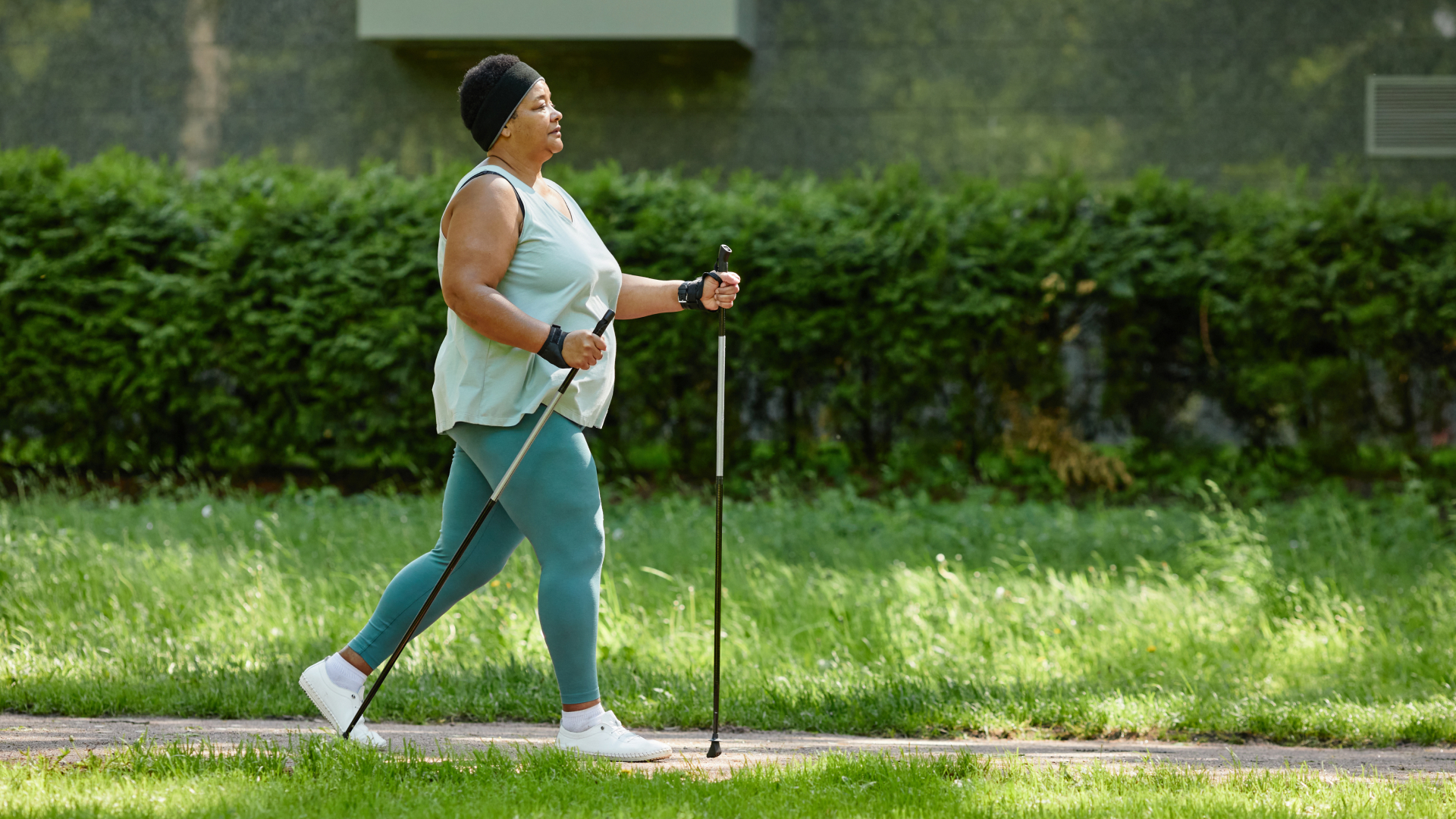
Walking is one of the most practical ways to support weight loss and improve overall health. It can be built into daily life, doesn’t require specialist equipment, and can be adapted to most abilities. But how many steps a day do you actually need? This guide explains the evidence and helps you set a step count that is realistic, safe, and effective.
Safety first: Before starting a new walking programme or increasing your activity, check with your GP, Consultant, or Physiotherapist, particularly if you have existing medical conditions, mobility issues, or are significantly inactive. They can advise on safe starting levels and help prevent injury.
Why walking is an important part of your weight loss journey
Walking increases the number of calories your body uses each day. To lose weight, you need to burn more calories than you consume, creating a calorie deficit.
Some of the benefits of walking include:
- Supports daily calorie burn without extreme effort
- Can be done consistently, even alongside structured exercise or strength training
- Fits into everyday routines like commuting, errands, or short activity breaks
- Usually does not increase appetite, which can help with managing calorie intake
- Can also be a bit of ‘me time’: whether you’re walking alone or with your dog, you can let your thoughts wander or listen to a favourite podcast or music
For people carrying significant excess weight or who are underactive, walking is generally lower impact (so less risk of causing injuries) than running or high-intensity exercise, though it can still feel physically demanding. Starting slowly and building up gradually is essential to avoid injury and promote adherence.
How steps translate into calories burned
Calories burned depend on:
- Body weight: people who weigh more burn more calories per step
- Walking pace: brisk walking burns more than slow strolling
- Terrain: hills or uneven surfaces increase effort
A simple estimate of calories burned based on mileage:
- About 2,000 steps is approximately 1 mile
- That mile may burn 80–120 calories, depending on body weight and pace
Start with small increases:
- Adding 1,000 extra steps per day (roughly half a mile) can burn an additional 40–60 calories
- Increase gradually by 1,000–2,000 steps at a time to allow your body to adapt safely
Over weeks and months, these small increments add up to meaningful extra calorie burn, without overwhelming joints or energy levels.
How walking affects metabolism and fat burning
Walking does more than burn calories while you’re moving. Evidence shows that in adults who are overweight or have obesity, moderate walking added to a calorie restricted diet:
- Enhance fat mass loss more than diet alone
- Improve markers of insulin regulation, such as lower fasting insulin and reduced insulin resistance
These metabolic improvements indicate that walking supports your body in using fat stores more efficiently and managing blood glucose, which are benefits that persist beyond the immediate calorie burn (Kleist et al., 2017).
Step targets: evidence and practical guidance
The famous 10,000-step target started as a marketing concept in the 1960s, not as a clinical guideline. Modern research provides a clearer picture of how many steps are truly associated with health benefits.
Evidence from large population studies:
A meta-analysis in The Lancet Public Health examined adults’ daily steps and health outcomes. Compared with people taking around 2,000 steps per day, those taking about 7,000 steps daily had substantially lower risks of major health problems, including all-cause mortality, cardiovascular disease, type 2 diabetes, and dementia (Ding et al., 2025).
The largest improvements were observed as step counts increased from very low levels up to around 7,000 steps per day. Beyond this, additional benefits continued, but the rate of improvement slowed.
What this means in practice:
- 7,000 steps per day is associated with clinically meaningful health benefits and may be a more realistic and achievable target for many people
- 10,000 steps per day can still be a goal for those already active, but is not required for most to gain substantial health improvements
- Consistency and gradual increases are more important than hitting a specific number
Increasing and progressing your steps safely
1. Track your baseline
- Use a pedometer, smartphone app, or fitness tracker
- Record daily steps for 5–7 days without changing habits
This gives you a realistic starting point.
2. Increase gradually, step by step
- Add 1,000 extra steps per day above your baseline and maintain it for at least a week before increasing again
- For example, if your baseline is 2,000 steps, aim for 3,000 steps per day for a week
- Once this feels comfortable, add another 1,000 steps per day
- Continue this incremental approach until you reach your target, such as 7,000 steps per day
This structured, stepwise approach reduces the risk of injury, fatigue, or discouragement.
3. Manage plateaus
Even with consistent walking, progress can stall. To continue safely:
- Maintain current step count for 1–2 weeks if progress stalls before increasing again
- Vary intensity: Include short intervals of brisk walking or gentle inclines to increase calorie burn without overloading joints
- Track patterns, not just numbers: Look at weekly averages rather than daily fluctuations
Maintaining your step target
Embedding walking into your daily routine sustainably is key. Practical strategies include:
- Consistent timing: Walk at similar times each day to form a habit, e.g., after breakfast or during your lunch break
- Digital reminders: Use smartphone alarms, wearable alerts, or calendar notifications to prompt movement
- Social support: Walk with friends, family, or colleagues to boost motivation and accountability
- Flexible options for bad weather or dark evenings: Walk indoors, use shopping centres, or climb stairs if outdoor walking isn’t possible
- Combine with other activity: Strength training 1–2 times per week supports metabolic health and preserves lean mass
Tracking and motivation
Tracking is a tool for behaviour change:
- Wearables or apps: Track daily or weekly steps; NHS Active 10 is useful for 10-minute brisk walking bursts
- Set micro-goals: Small, incremental targets improve adherence
- Reinforce behaviour: Reward yourself for consistent weekly averages rather than punishing missed days
- Plan for dips: Motivation fluctuates; plan strategies for busy days, illness, or holidays
There is no one-size-fits-all number. Research indicates that about 7,000 steps per day is an evidence-based, realistic target that provides substantial health benefits and supports weight loss when combined with dietary changes (Ding et al., 2025; Kleist et al., 2017).
Focus on gradual increases, realistic targets, and sustainable behaviour change, rather than an arbitrary figure. Progress, consistency, and safety are what drive long-term results.
References
Ding, D., Nguyen, B., Nau, T., Luo, M., Del Pozo Cruz, B., Dempsey, P. C., Munn, Z., Jefferis, B. J., Sherrington, C., Calleja, E. A., Hau Chong, K., Davis, R., Francois, M. E., Tiedemann, A., Biddle, S. J. H., Okely, A., Bauman, A., Ekelund, U., Clare, P., & Owen, K. (2025). Daily steps and health outcomes in adults: a systematic review and dose-response meta-analysis. The Lancet. Public health, 10(8), e668–e681. https://doi.org/10.1016/S2468-2667(25)00164-1
Kleist, B., Wahrburg, U., Stehle, P., Schomaker, R., Greiwing, A., Stoffel-Wagner, B., & Egert, S. (2017). Moderate Walking Enhances the Effects of an Energy-Restricted Diet on Fat Mass Loss and Serum Insulin in Overweight and Obese Adults in a 12-Week Randomized Controlled Trial. The Journal of nutrition, 147(10), 1875–1884. https://doi.org/10.3945/jn.117.251744
NHS. (n.d.). Get active with NHS Active 10. https://www.nhs.uk/better-health/get-active/

