
What is a washout period?
A washout period is a planned pause between stopping one medication and starting another. During this interval, your body is given the time it needs to clear, or “wash out,” the previous treatment so it is less likely to influence how the next medicine works.
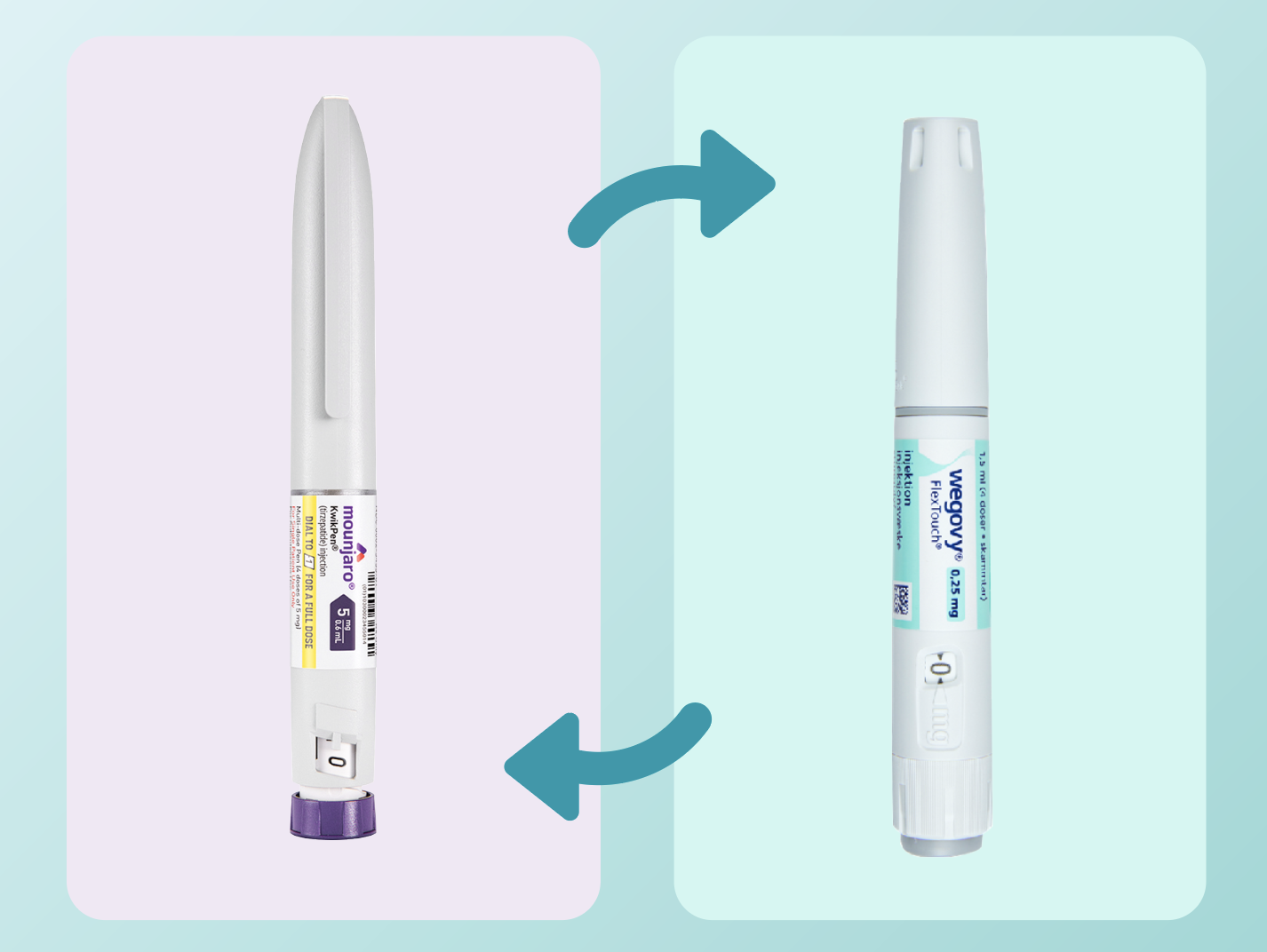
In the context of weight-loss medication, especially when switching between GLP-1 receptor agonists such as semaglutide (Wegovy) or Tirzepatide (Mounjaro)—washout periods are a crucial safety measure.
Why is a washout period important for weight-loss treatments?
These medications have long half-lives (the time it takes for the amount of a drug's active substance in your body to reduce by half), so starting a new treatment too soon can:
- Increase the risk of side effects,
- Reduced effectiveness
- Overlap drug activity, making unclear which drug is causing which reaction, and the new therapy’s true effects may be masked.
- Clearing the previous medication allows your prescriber to monitor progress accurately, and understand which effects belong to the new treatment.
A well-timed washout period helps to mitigate all these risks.
How long should a washout period be?
At Phlo Clinic, we recommend a 7-day washout period from your last dose of the previous GLP-1 medication before you start your new GLP-1 treatment. This is to minimise side effects and aid a smooth transition between the medications.
This applies whether you are moving:
from Wegovy (semaglutide) to Mounjaro (tirzepatide), or
from Mounjaro (tirzepatide) to Wegovy (semaglutide)
This balances safety and practicality: it gives sufficient time for most of the prior drug’s activity to decrease, helping to reduce the risk of overlapping effects and side effects. After the washout, you begin your new medication at the starting dose recommended by our prescribers, ensuring a controlled and clinically supervised transition.
What is the medication half life of Wegovy and Mounjaro?
- Semaglutide (Wegovy) has an approximate half-life of around seven days
- Tirzepatide (Mounjaro) has a half-life of around five days.
What to expect during the washout period
As your previous medication clears from your system, several physiological changes may occur. While these are generally expected and temporary, being aware of them can help you manage the transition with confidence.
- Gradual elimination of the drug - because GLP-1 agonists have long half-lives, their therapeutic effects diminish slowly rather than abruptly. You may notice subtle shifts in your appetite, digestion, or energy levels as the active drug level in your body decreases.
- Potential return of appetite and digestive changes - depending on why you were using the GLP-1 medicine, symptoms may start to return. Appetite suppression may lift, meaning your hunger could increase, and portion sizes or cravings might change. Mild digestive changes (such as altered gut motility) are also common, though usually short-lived and tend to resolve as your body rebalances.
These changes are typical and reflect the body reverting to its natural physiological state without active medication support.
5 steps to managing your body during the washout period
Managing a washout period well requires a combination of self-care, close observation, and clear communication with our healthcare team. Though the pause is temporary, using the time wisely can make the transition smoother and more comfortable.
1. Monitor your body for a return of appetite or other changes
Pay close attention to changes in appetite, digestion, or energy. Using a simple journal, health app, or chart to record your observations, such as hunger levels, meal sizes or cravings provides valuable data to tailor your care.
2. Implement supportive care measures if needed
Lifestyle strategies are powerful during this phase. Focus on well-balanced meals that include lean proteins, fibre, and healthy fats to stabilise appetite. Stay hydrated, and prioritise good sleep hygiene. Light to moderate exercise, such as walking or gentle strength training, can support metabolic balance and help regulate hunger. Mindful eating and portion control techniques (e.g., paying attention to hunger/fullness cues) also help ease your body through the transition.
3. Keep to the washout protocol
It’s critical to follow your prescribed washout timeline exactly. Beginning your new medication too early can raise the risk of gastrointestinal discomfort (such as nausea or vomiting) or other compounded side effects. Adhering to the recommended washout period ensures your body has truly reset, making your new treatment as safe and effective as possible.
4. Clarify timing and dosing instructions
Before starting your new medication, make sure you have precise instructions from our clinician team including when to restart and at what dose.
If anything is unclear or you feel uncertain, do not hesitate to reach out to the Phlo Clinic team - clarifying before starting is far safer than guessing.
5. Keep in contact with your healthcare provider
Your healthcare team (whether at Phlo Clinic or another clinic) should remain your principal source of support during this time. If you experience any concerning symptoms, such as severe nausea or digestive issues, contact your healthcare provider. Regular check-ins offer reassurance, help adjust your plan if needed, and ensure you’re ready for your next treatment phase confidently.
Why the washout Is more than just a pause
A washout period is more than just a break, it’s a purposeful reset. It gives your body the space to adjust, stabilise, and prepare for the next stage of treatment. By allowing this short transition phase, you help create the right conditions for your upcoming therapy to work more smoothly and effectively.
References
Specialist Pharmacy Service. Considerations and interactions with GLP-1 receptor agonists. SPS (NHS). SPS - Specialist Pharmacy Service
NICE. Tirzepatide for treating type 2 diabetes (TA924). National Institute for Health and Care Excellence, 2023. NICE+1
NICE. A practical guide to using medicines to manage overweight and obesity (NG246). National Institute for Health and Care Excellence, 2025. NICE
GOV.UK. GLP-1 medicines for weight loss and diabetes: what you need to know. Medicines and Healthcare products Regulatory Agency (MHRA). GOV.UK
Kent & Medway NHS formulary. Glucagon-Like Peptide-1 (GLP-1) receptor agonists – clinical guidance. NHS. kentandmedwayformulary.nhs.uk
NICE. NICE recommends new drug for people living with obesity (semaglutide). NICE News, 2022. NICE
Rubino, D., et al. (2021). “Effect of Continued Weekly Subcutaneous Semaglutide vs Placebo on Body Weight Maintenance in Adults With Overweight or Obesity: The STEP 4 Randomized Clinical Trial.” JAMA, 325(14): 1414–1425.
Wilding, J. P. H., et al. (2022). “Weight regain and cardiometabolic effects after withdrawal of semaglutide: The STEP 1 trial extension.” Diabetes, Obesity and Metabolism, 24(8): 1553–1564.
Frias, J. P., et al. (2021). “Efficacy and safety of tirzepatide in type 2 diabetes.” New England Journal of Medicine, 385: 503–515.
Nauck, M. A. & Meier, J. J. (2019). “Incretin hormones: Their role in health and disease.” Diabetes, Obesity and Metabolism, 21(Suppl 1): 5–21.
Pratley, R. E., et al. (2018). “Semaglutide versus dulaglutide in type 2 diabetes: SUSTAIN 7 trial.” The Lancet Diabetes & Endocrinology, 6(4): 275–286.
Lean, M. E. J., et al. (2019). “Semaglutide and appetite regulation: Effects on energy intake and gastric emptying.” Diabetes, Obesity and Metabolism, 21(3): 623–632.

